
 Save
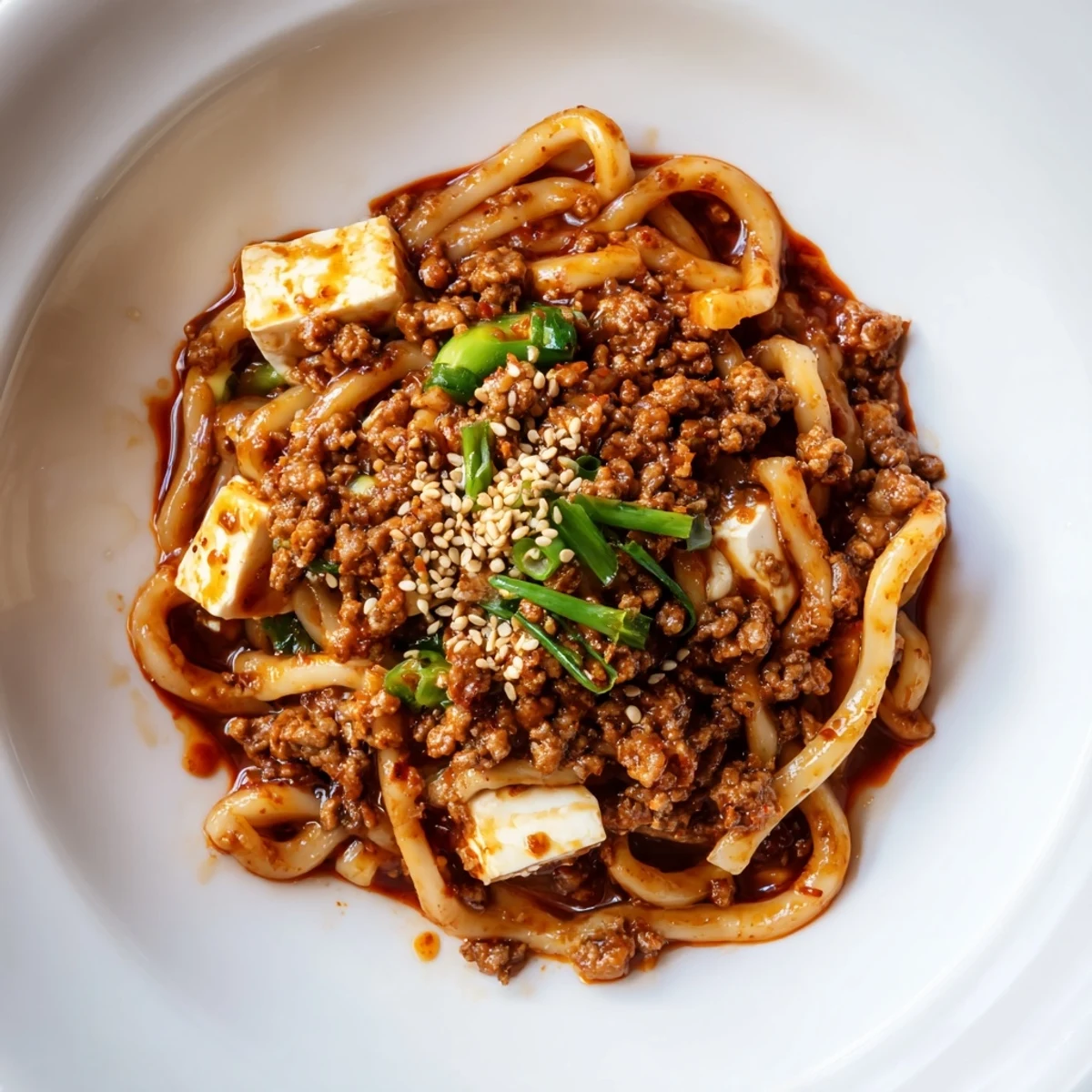
Save This vibrant fusion dish brings together the numbing heat of classic Sichuan mapo tofu with the hearty comfort of Japanese udon noodles. Soft tofu cubes simmer in a rich, aromatic sauce featuring fermented chili bean paste, garlic, ginger, and toasted Sichuan peppercorns, while ground pork adds savory depth. The thick, glossy sauce clings beautifully to the chewy udon noodles, creating perfectly balanced bites in every bowl.
Ready in just 35 minutes, this dish offers restaurant-quality flavors at home. The sauce develops complex layers from doubanjiang fermentation, while the cornstarch thickener creates that signature velvety texture. Adjust the heat level to your preference, and customize with plant-based mince for a vegetarian version that's just as satisfying.
The first time I made Mapo Tofu with udon noodles was actually a happy accident. I had planned to make regular Mapo Tofu over rice, but discovered my rice container was empty. A package of fresh udon sat in the fridge, staring at me almost accusingly. That experimental dinner turned into something I now make at least twice a month, the thick spicy sauce clinging to every chewy noodle strand in ways rice never could.
Last winter, during that stretch where it seemed like it would never stop raining, I made this for three friends who were completely frazzled from work. Watching them hunch over their bowls, shoulders slowly dropping as the steam rose up, I realized this is what comfort food actually means. They didnt say much while eating, just the occasional appreciative hum and the clink of spoons against bowls.
Ingredients
- Soft tofu: Cubed gently so it holds its shape but still absorbs all that spicy sauce, becoming little pillows of flavor in every bite
- Ground pork or plant-based mince: This adds substance and richness, making the dish feel substantial enough for a full dinner
- Fresh udon noodles: Their thickness and chewiness are perfect here, they stand up to the bold sauce instead of disappearing into it
- Sichuan peppercorns: Lightly crushing these releases their signature numbing quality that makes Mapo Tofu so distinctive and addictive
- Doubanjiang: This fermented chili bean paste is the heart of the dish, adding depth, umami, and that beautiful red color to the sauce
- Cornstarch slurry: Essential for thickening the sauce just enough so it coats the noodles rather than pooling underneath them
Instructions
- Get everything ready:
- Prep your ingredients before you start cooking, cube the tofu carefully, mince the garlic and ginger, slice the spring onions separating white and green parts, and get that water boiling for the udon
- Toast the peppercorns:
- Heat oil in your wok or large skillet over medium heat, add the Sichuan peppercorns and let them toast for about 30 seconds until you can smell their citrusy aroma, then remove them unless you want extra heat
- Build your aromatics:
- Add garlic, ginger, and the white parts of the spring onions to the hot oil, sautéing for just a minute until the smell fills your kitchen and everything is fragrant
- Cook the meat:
- Crank the heat up to medium-high, add your ground pork or plant-based mince, and cook until its browned and broken into small pieces, stirring constantly so it cooks evenly
- Add the doubanjiang:
- Stir in that fermented chili bean paste and let it cook for 1 to 2 minutes until the oil turns red and smells amazing, this is where all the flavor develops
- Season the sauce:
- Pour in the soy sauce, oyster sauce, Shaoxing wine, and sugar, mixing everything together thoroughly so the meat is evenly coated
- Add tofu and broth:
- Gently lower in those tofu cubes and pour in the broth, letting everything simmer for 5 minutes while you occasionally spoon sauce over the tofu
- Thicken it up:
- Stir in your cornstarch slurry and let the sauce simmer for another 2 to 3 minutes until it thickens beautifully
- Cook the noodles:
- While the sauce simmers, cook your udon according to the package directions, drain them well, and divide them among four bowls
- Bring it all together:
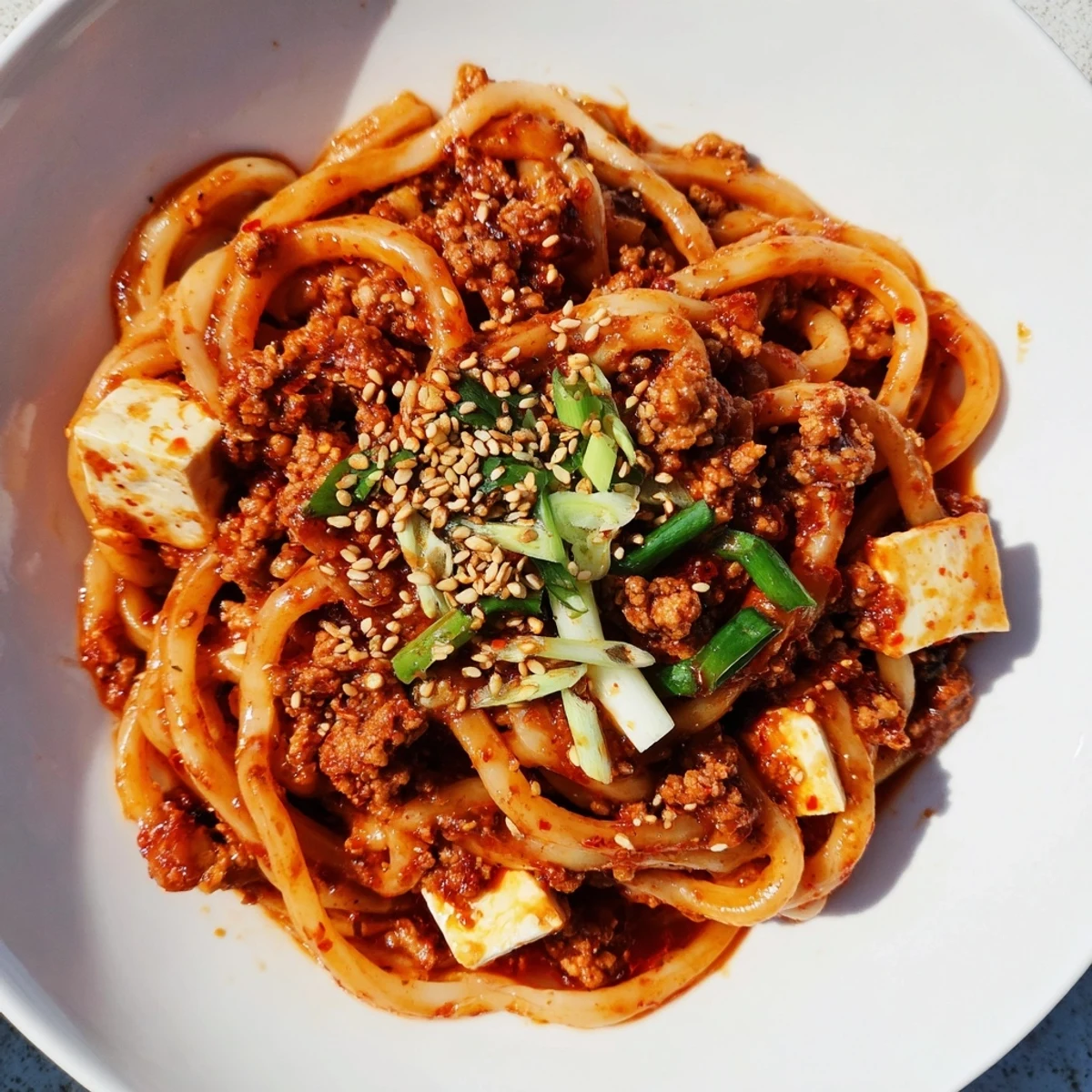
- Spoon generous portions of that spicy mapo tofu over the noodles, garnish with the green onions, toasted sesame seeds, and chili oil if you like it hot
 Save
Save My partner normally claims they dont like spicy food, but the first time they tried this, they ate two bowls without saying a word except to ask if there was more. Now whenever udon noodles go on sale, they give me that knowing look from across the grocery store aisle. Some dishes just have that magnetic quality, where the combination of flavors feels greater than the sum of its parts.
Getting The Sauce Just Right
The consistency of your sauce makes or breaks this dish, too thin and the noodles swim sadly, too thick and it becomes gluggy. Watch how the cornstarch slurry transforms everything, usually within those first 30 seconds of stirring. If it looks too thick, splash in a little more broth, too thin, give it another minute to reduce while stirring gently.
Noodle Timing Secrets
Always cook your udon while the mapo tofu simmers, those last few minutes of sauce reduction are exactly when you need to focus on the noodles. Fresh udon cooks incredibly fast, sometimes literally 1 to 2 minutes, so have your strainer ready and your bowls waiting. Theres nothing sadder than perfectly cooked sauce sitting while you scramble to finish the noodles.
Make It Yours
This recipe welcomes personal touches, I once added baby bok choy in the last few minutes of simmering and the slight crunch was perfect against the soft tofu. You could swap the meat for crumbled extra firm tofu, add wood ear mushrooms for texture, or toss in some snow peas right at the end for freshness.
- Try drizzling a little sesame oil over the finished bowls for extra nuttiness
- A soft boiled egg on top makes it feel even more like a complete meal
- Leftovers, if you somehow have any, reheat beautifully with a splash of water to loosen the sauce
 Save
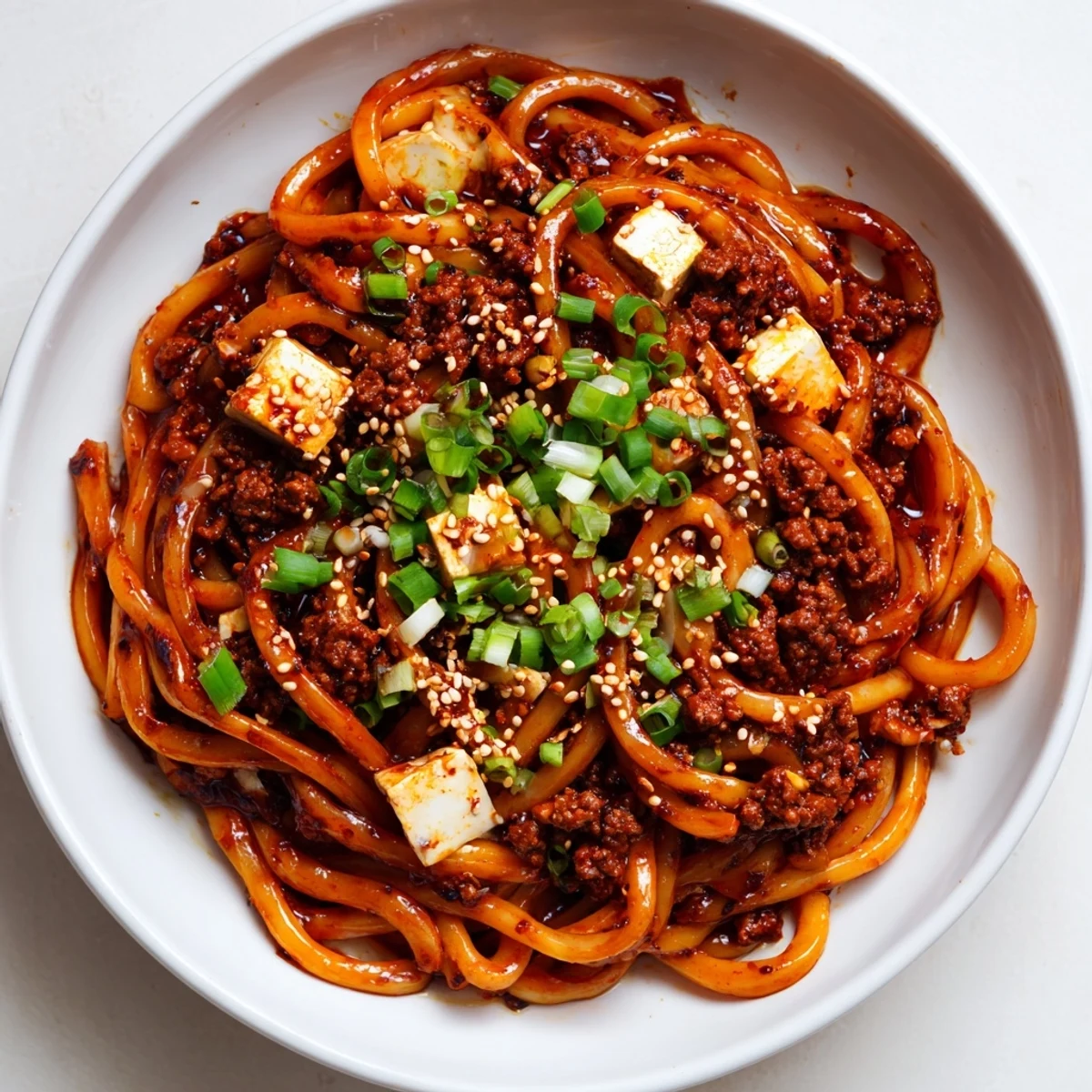
Save Whether you are cooking for a crowd or just treating yourself on a Tuesday night, this dish has a way of making everything feel a little better. Grab your chopsticks and dig in while its still steaming hot.
Common Questions
- → Can I make this dish vegetarian?
-
Absolutely. Substitute the ground pork with plant-based mince and swap traditional oyster sauce for mushroom sauce. The result is just as flavorful and satisfying.
- → How spicy is mapo tofu udon?
-
The heat level depends on your doubanjiang amount. The fermented chili bean paste provides moderate heat, while Sichuan peppercorns add numbing sensation rather than pure spice. Adjust by adding more or less paste.
- → What type of tofu works best?
-
Soft or silken tofu creates that signature silky texture that absorbs the spicy sauce beautifully. Handle gently when cubing and adding to the pan to maintain the delicate structure.
- → Can I use dried udon noodles?
-
Yes, dried udon works perfectly. Cook according to package directions, which may take slightly longer than fresh noodles. Just don't overcook or they'll become mushy under the sauce.
- → How do I store leftovers?
-
Store the mapo tofu sauce and udon noodles separately in airtight containers. The sauce keeps 3-4 days and actually develops deeper flavor. Reheat gently and pour over freshly cooked or warmed noodles.
- → What can I serve with mapo tofu udon?
-
This dish is substantial enough to stand alone. Light sides like cucumber salad, steamed bok choy, or pickled vegetables complement the rich flavors. A cold lager or light sake pairs perfectly.