
 Save
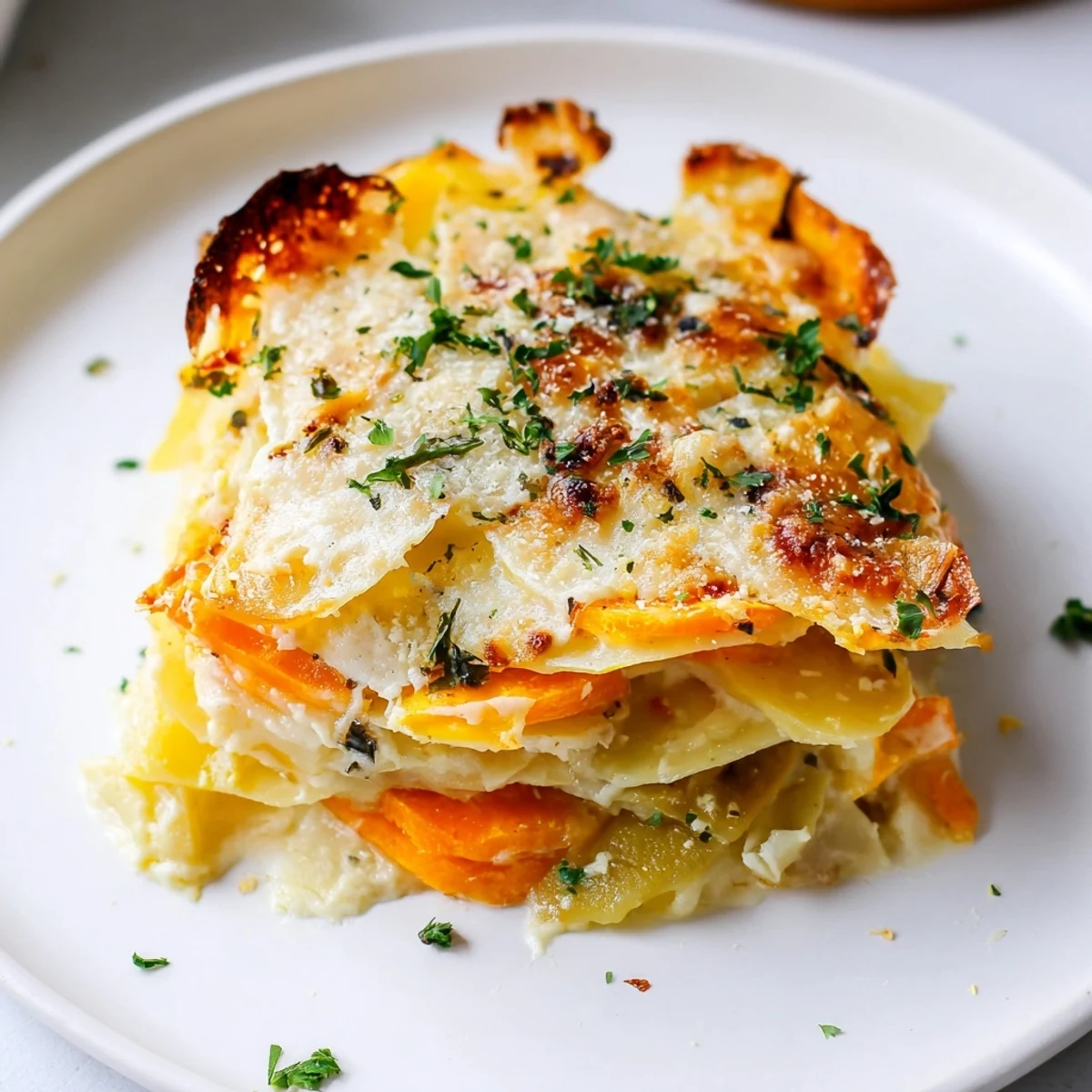
Save This dish celebrates a hearty mix of winter vegetables such as parsnips, carrots, rutabaga, and leeks, thinly sliced and layered carefully in a buttery baking dish. A rich sauce made from milk, cream, and Dijon mustard binds the vegetables, while a generous topping of Gruyere and Parmesan melts to a golden crust during baking. The gratin develops a comforting depth of flavor with nutmeg and mustard subtly enhancing the creamy sauce. Perfectly baked to tender softness, it rests before garnishing with fresh parsley, ready to complement any meal.
There's something about the smell of Gruyere melting in the oven that stops me mid-afternoon and makes me forget whatever I was doing. One November, my partner came home with a bag of root vegetables from the farmer's market, and I realized I had just enough cream in the fridge to turn them into something warm and golden. That first spoonful, with the cheese slightly crispy on top and the vegetables just tender enough to break with a spoon, became the dish I keep coming back to when the weather turns cold.
I made this for a dinner party on the coldest night of December, when everyone arrived stamping snow from their boots and shivering. Pulling this gratin from the oven—bubbling at the edges, the top a perfect shade of burnished gold—felt like such a small act of generosity. People asked for seconds before they'd even finished their first plate, and someone's grandmother said it reminded her of her childhood in Lyon.
Ingredients
- Parsnips: Their natural sweetness balances the earthy celeriac and adds a subtle vanilla-like note that you'll taste but won't quite be able to name.
- Carrots: Cut them thin so they soften evenly with the other vegetables, or they'll end up too firm by the time the rutabaga is tender.
- Rutabaga: This is the secret ingredient that gives the gratin its distinctive flavor—don't skip it, and don't mistake it for regular turnip if that's what your market has.
- Yukon Gold potato: The waxy texture means it won't break apart during layering and baking, keeping your gratin neat and cohesive.
- Celeriac: Peel away more of the outer layer than you think necessary, as the exterior can be stringy and bitter.
- Leek: Slice it lengthwise first, then rinse thoroughly between the layers to catch any hidden grit, then slice into half-moons.
- Unsalted butter and flour: These form your roux, the foundation that keeps the sauce silky and prevents graininess.
- Whole milk and heavy cream: The combination is crucial—all cream makes it too rich, all milk means it won't be quite luxurious enough.
- Dijon mustard: Just a teaspoon cuts through the richness and adds a whisper of sophistication that rounds out the whole dish.
- Nutmeg: Fresh, freshly grated nutmeg is non-negotiable here; ground nutmeg from a tin tastes dusty by comparison.
- Gruyere cheese: It melts to a creamy, slightly grainy texture that's different from milder cheeses, and the flavor deepens as it bakes.
- Parmesan cheese: This browns beautifully on top and adds an umami punch that makes people come back for more.
Instructions
- Heat your oven and prepare the stage:
- Set the oven to 375°F and butter your baking dish generously, working it into the corners where vegetables like to stick. Having everything ready before you start means you won't panic halfway through.
- Slice your vegetables with intention:
- Use a mandoline if you have one—it keeps everything uniformly thin and the whole dish bakes evenly. If you're using a knife, aim for about the thickness of a coin, and don't stress if they're not perfectly uniform.
- Build your roux without lumps:
- Melt the butter over medium heat, add flour, and whisk continuously for a full minute to cook out the raw flour taste. You're looking for the texture of wet sand before you add the liquid.
- Add the liquid slowly and smooth:
- Pour the milk and cream in gradually while whisking constantly, letting each addition fully incorporate before adding more. This prevents those frustrating lumps that ruin the silky texture.
- Season the sauce with soul:
- Stir in the mustard, nutmeg, salt, and pepper, tasting as you go because you know your palate better than any recipe does. Remember that cheese will add saltiness later, so don't over-season now.
- Layer like you mean it:
- Arrange half the vegetables in the dish, pour half the sauce over them, then sprinkle half the Gruyere. Repeat with the remaining vegetables, sauce, and top with Gruyere and Parmesan.
- Bake low and slow, then finish high:
- Cover with foil and bake for 35 minutes so the vegetables steam and soften, then remove the foil and bake another 15 minutes until the top turns golden and the edges bubble slightly. Foil is your friend here—it prevents the top from browning too quickly before the vegetables underneath are done.
- Let it rest before serving:
- Ten minutes of resting lets the gratin set slightly and makes it easier to portion without it falling apart on the plate. This is also the perfect time to chop your parsley and take a breath before plating.
 Save
Save My neighbor brought me a container of this after my surgery, and eating it straight from the fridge the next morning—cold and rich and somehow comforting—made me realize this wasn't just dinner, it was kindness in baked form. That's when I understood that certain dishes matter beyond their ingredients.
The Gratin Moment
There's a specific sound the gratin makes when it's almost done, a gentle persistent bubbling around the edges that tells you to check on it soon. The smell at that moment—earthy vegetables mingling with toasted cheese and nutmeg—is what winter tastes like to me.
Making It Your Own
This recipe is flexible enough to change with what you find at the market, but structured enough that you can't really mess it up. Sweet potato works beautifully if parsnips aren't available, and turnips can replace the rutabaga in a pinch. The sauce ratios are what matter most—get those right and you can play with the vegetables without fear.
Timing and Serving
This gratin is generous enough to serve six as a main course with a salad, or eight to ten as a side dish at a larger meal. It's the kind of dish that sits happily on the counter while everything else comes together, and it actually tastes better if it's not the first thing on the plate. You want people to get to it with a bit of anticipation, when they're ready to slow down and really taste it.
- Serve it alongside roasted chicken, beef, or fish, or make it the star of a vegetarian dinner with crusty bread and a sharp green salad.
- Leftovers keep for four days in the refrigerator and reheat gently in a 325°F oven, covered with foil, until warmed through.
- You can assemble this completely a day ahead and refrigerate it uncooked, then bake it the next day—just add 10 extra minutes to the baking time.
 Save
Save This gratin has become my answer to so many moments—when the weather is cold and I need comfort, when I'm bringing dinner to someone, when I want to prove that simple things done thoughtfully are worth remembering. Make it, and it will become yours too.
Common Questions
- → Can I use different vegetables in this gratin?
-
Yes, root vegetables like sweet potatoes or turnips can be substituted depending on availability and preference.
- → What cheese alternatives work well here?
-
Emmental or sharp white cheddar provide similar melt and flavor if Gruyere is unavailable.
- → How is the creamy sauce prepared?
-
The sauce starts with a roux of butter and flour, then milk and cream are whisked in and thickened, finished with Dijon mustard, nutmeg, salt, and pepper for flavor.
- → Can I add garlic to enhance the flavor?
-
Yes, a clove of minced garlic stirred into the sauce adds a savory depth without overpowering the other ingredients.
- → How should the gratin be baked?
-
Bake covered for 35 minutes, then uncovered for 15 minutes to achieve a golden top and perfectly tender vegetables.