
 Save
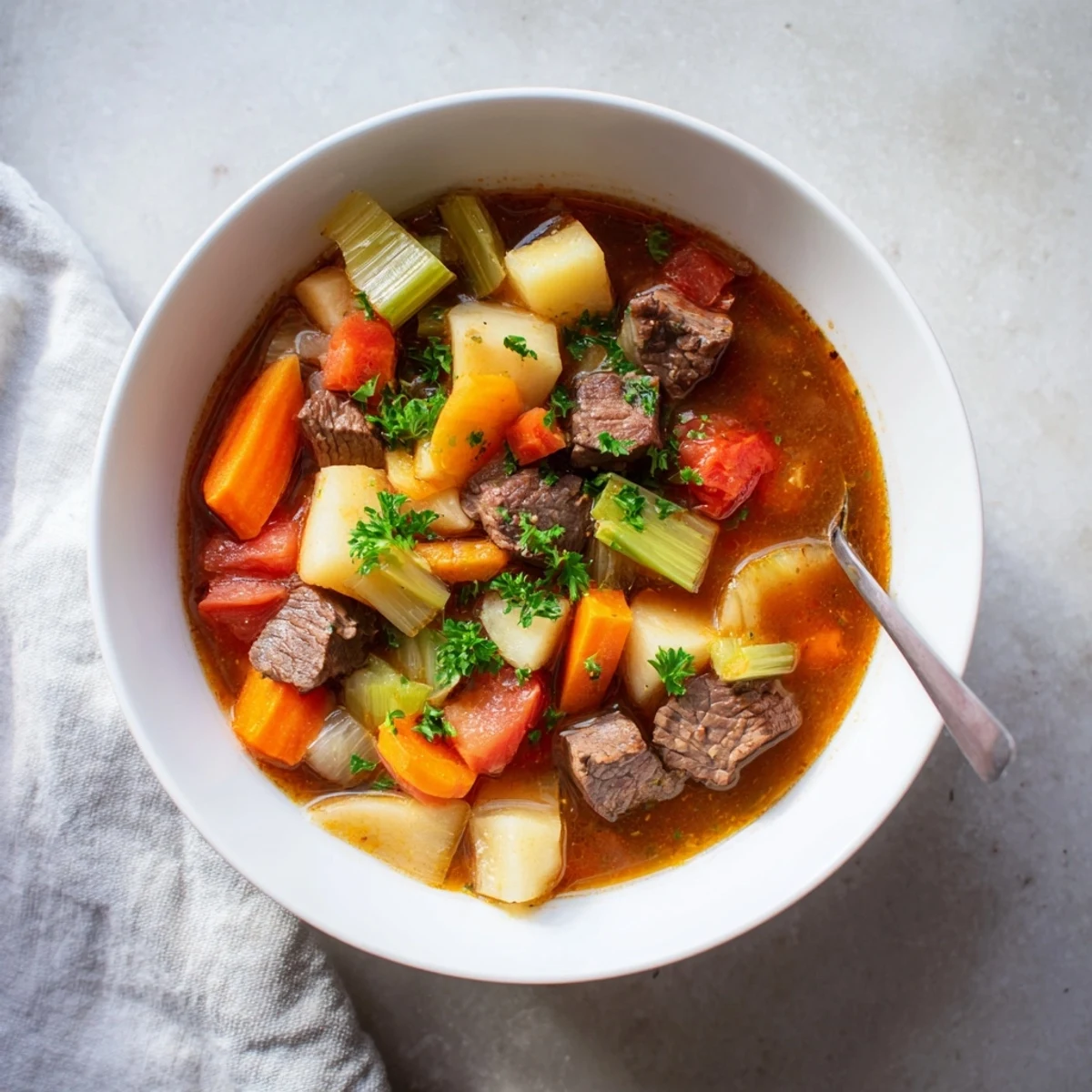
Save This comforting stew bowl combines tender beef or chicken with root vegetables like carrots, parsnips, potatoes, and rutabaga in a flavorful tomato-based broth. Aromatic herbs including thyme, rosemary, and smoked paprika create layers of warming flavor perfect for cold weather.
The dish comes together in just 20 minutes of prep time, then simmers gently for an hour to develop rich depth. Frozen peas added in the final minutes provide bright color and sweetness. Each serving delivers 29 grams of protein and makes a complete, satisfying meal.
Adaptable for various dietary needs—simply omit meat for vegetarian or choose certified gluten-free broth. Serve with crusty bread or over grains for even more heartiness.
The snow had been falling for three days straight when I finally decided to make this stew. My kitchen was the only warm room in the house, and something about root vegetables simmering for hours felt like the only logical response to endless gray skies.
Last February my neighbor texted at noon asking what smelled so good. She ended up staying for lunch, and we sat at my tiny table watching steam curl off our bowls while the snow kept falling outside.
Ingredients
- 500 g beef stew meat: I have used chicken thighs when beef felt too heavy, and honestly, both work beautifully
- 2 tbsp olive oil: Do not skip this step, browning the meat creates depth that you cannot get any other way
- 1 large onion: Take your time here, letting them turn golden and sweet is worth the extra few minutes
- 2 cloves garlic: Fresh garlic matters, and mince it right before adding so it stays potent
- 2 carrots and 2 parsnips: Parsnips are the secret sweet note that people can never quite identify
- 2 medium potatoes: I leave the skin on sometimes, especially with thin-skinned varieties
- 1 small rutabaga: If you cannot find rutabaga, turnip works but the flavor will be slightly sharper
- 2 celery stalks: They add brightness and balance to all those sweet root vegetables
- 400 g canned diced tomatoes: I buy the same brand my mother used, not because it is better, but habits run deep
- 100 g frozen peas: They go in at the very end, keeping them bright and sweet
- 1 L broth: Homemade broth is ideal, but a good quality store-bought one works perfectly fine
- 2 tbsp tomato paste: This concentrates the tomato flavor and gives the broth that rich color
- 1 tsp dried thyme and rosemary: Rub them between your fingers before adding to wake up the oils
- 2 bay leaves: Please remember to fish them out before serving, nobody wants that surprise
- ½ tsp smoked paprika: Just enough to add complexity without making it taste like barbecue
- 2 tbsp fresh parsley: Fresh herbs at the end make everything look and taste brighter
Instructions
- Build your flavor foundation:
- Heat that olive oil until it shimmers, then give your meat cubes space in the pan so they actually brown instead of steam
- Sweeten the base:
- Cook your onions until they are translucent and fragrant, then add garlic for just thirty seconds so it does not turn bitter
- Add the hard vegetables:
- Toss in all your root vegetables and let them cook briefly, coating them in those flavorful pan juices
- Wake up the spices:
- Stir in your tomato paste and herbs, letting everything cook for just a minute until the kitchen starts smelling incredible
- Bring it together:
- Pour in the tomatoes and broth, then return the meat to its home and bring everything to a gentle bubble
- Let time do the work:
- Drop the heat to low, cover it, and walk away for fifty minutes, checking occasionally to make sure it is barely simmering
- Fresh finish:
- Stir in those peas and cook for five more minutes uncovered, then season generously and taste it
- Serve it up:
- Ladle into warm bowls and scatter parsley on top like you are plating something at a restaurant
 Save
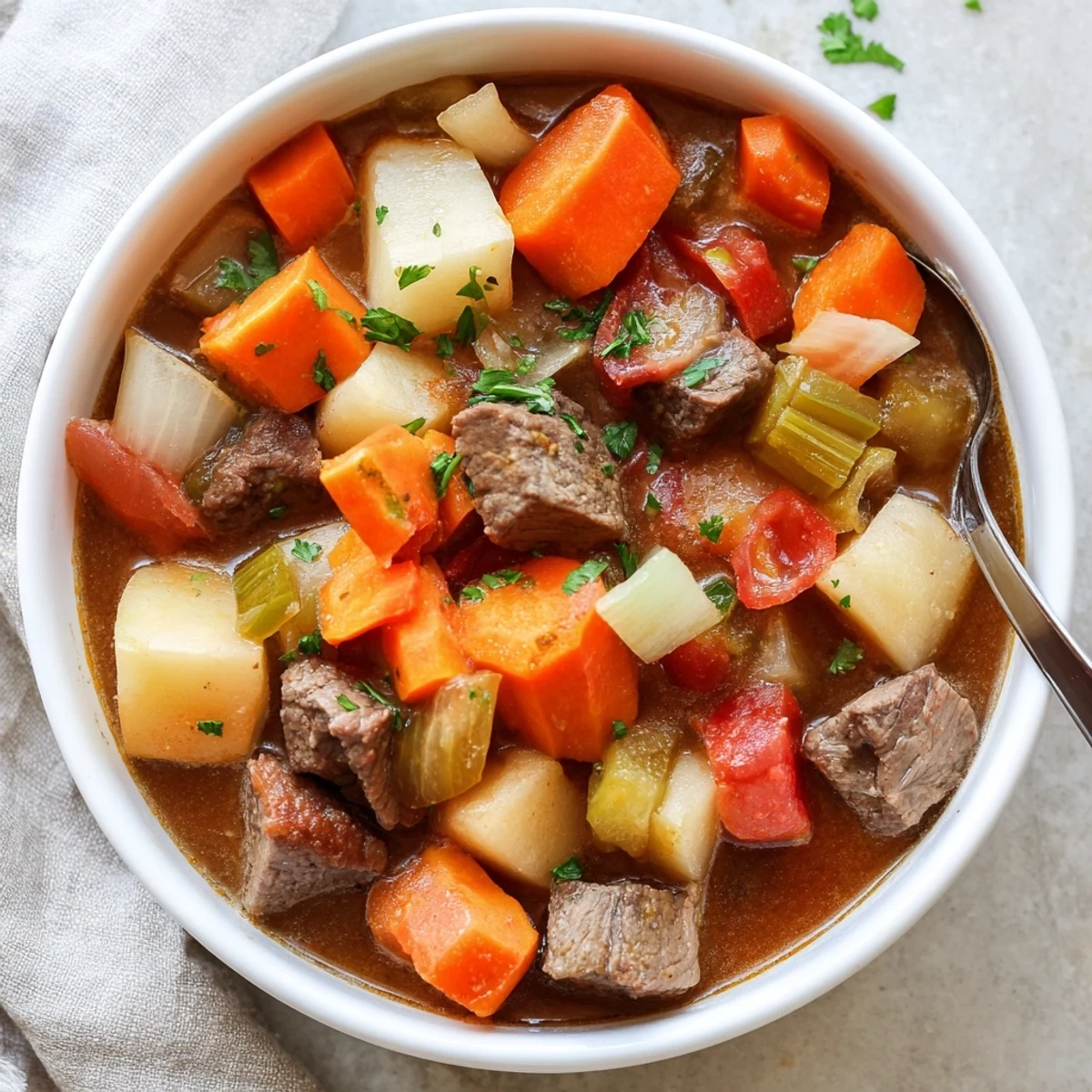
Save My sister called this winter survival food the first time she tasted it, and she is not wrong about that. Something about having a pot simmering on the back burner makes the cold feel less aggressive.
Making It Your Own
Some afternoons I skip the meat entirely and load it with extra root vegetables, letting them shine on their own. The broth still develops that same rich depth from the tomato paste and herbs, and honestly, nobody misses the protein.
What To Serve Alongside
Crusty bread is non-negotiable in my house, specifically the kind with a thick, chewy crust that stands up to dunking. I have also served it over cooked barley when I wanted something more substantial than bread.
Getting Ahead
This stew freezes beautifully, which is probably why I always make a double batch. Those days when coming home to cook feels impossible, having this in the freezer feels like having a secret weapon.
- Cool completely before freezing to avoid ice crystals
- Thaw overnight in the refrigerator, not on the counter
- Add a splash of fresh broth when reheating to loosen it up
 Save
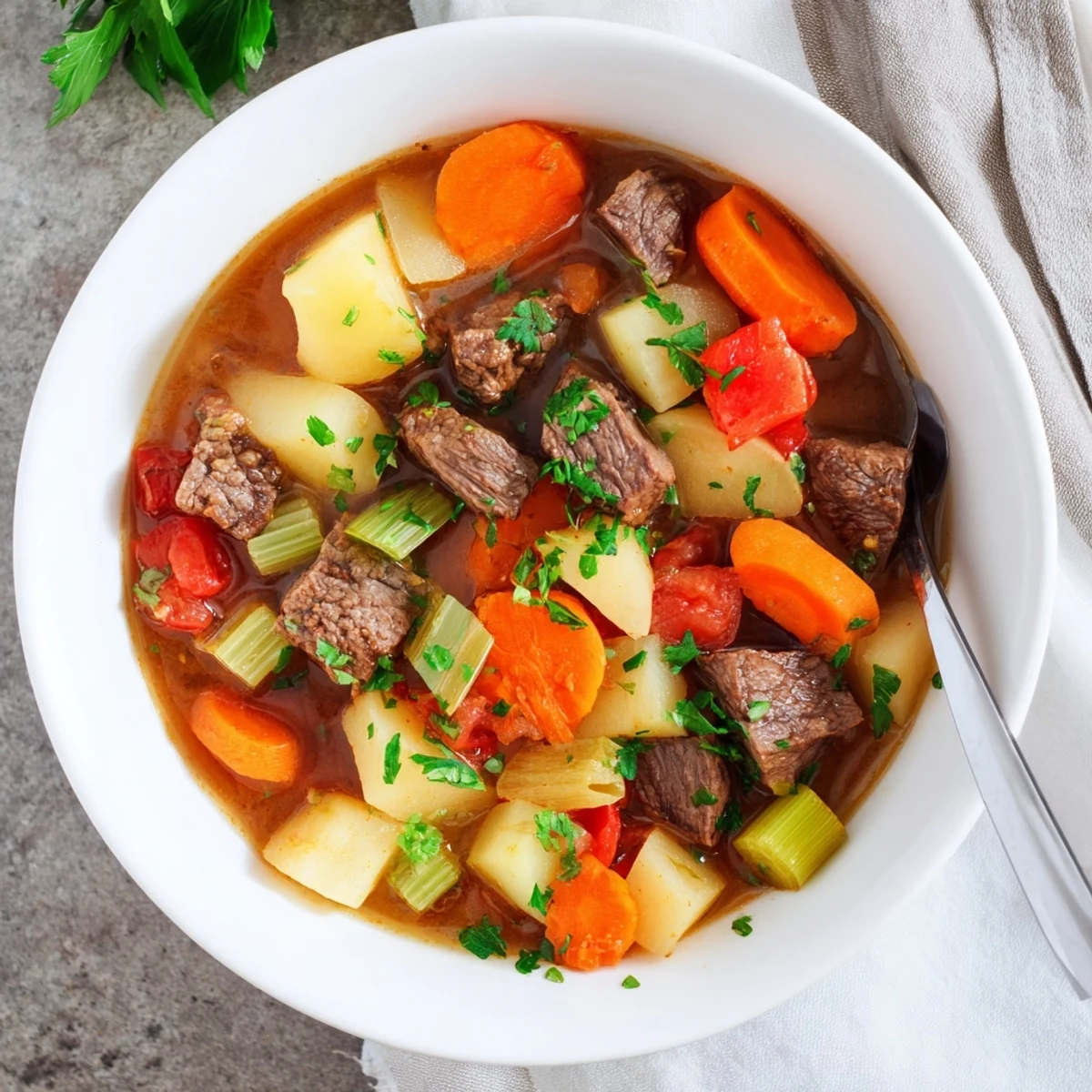
Save Winter feels shorter when there is a bowl of this waiting on the table. Simple food for complicated times.
Common Questions
- → What cuts of meat work best for this stew?
-
Beef stew meat cut into 2 cm cubes is traditional, but boneless chicken thighs work beautifully too. Choose well-marbled beef chuck or shoulder for the most tender results after slow simmering.
- → Can I make this vegetarian?
-
Absolutely. Simply omit the meat and double the root vegetables or add drained canned beans like kidney or cannellini beans. Use vegetable broth instead of beef broth for a completely plant-based version.
- → How long does this stew keep in the refrigerator?
-
Stored in an airtight container, this stew keeps well for 3-4 days in the refrigerator. The flavors actually deepen and improve after a day or two, making it excellent for meal prep.
- → Can I freeze this winter stew?
-
Yes, this freezes beautifully for up to 3 months. Cool completely before transferring to freezer-safe containers. Thaw overnight in the refrigerator and reheat gently on the stovetop, adding a splash of broth if needed.
- → What vegetables can I substitute if I don't have rutabaga?
-
Turnips make an excellent substitute for rutabaga. You could also use additional potatoes, sweet potatoes, or even butternut squash for a slightly sweeter variation that still maintains the hearty, comforting character.
- → What wine pairs well with this stew?
-
A medium-bodied red wine like Merlot or Pinot Noir complements the rich, savory flavors beautifully. The fruitiness balances the earthy root vegetables while the tannins stand up to the tender meat.