
 Save
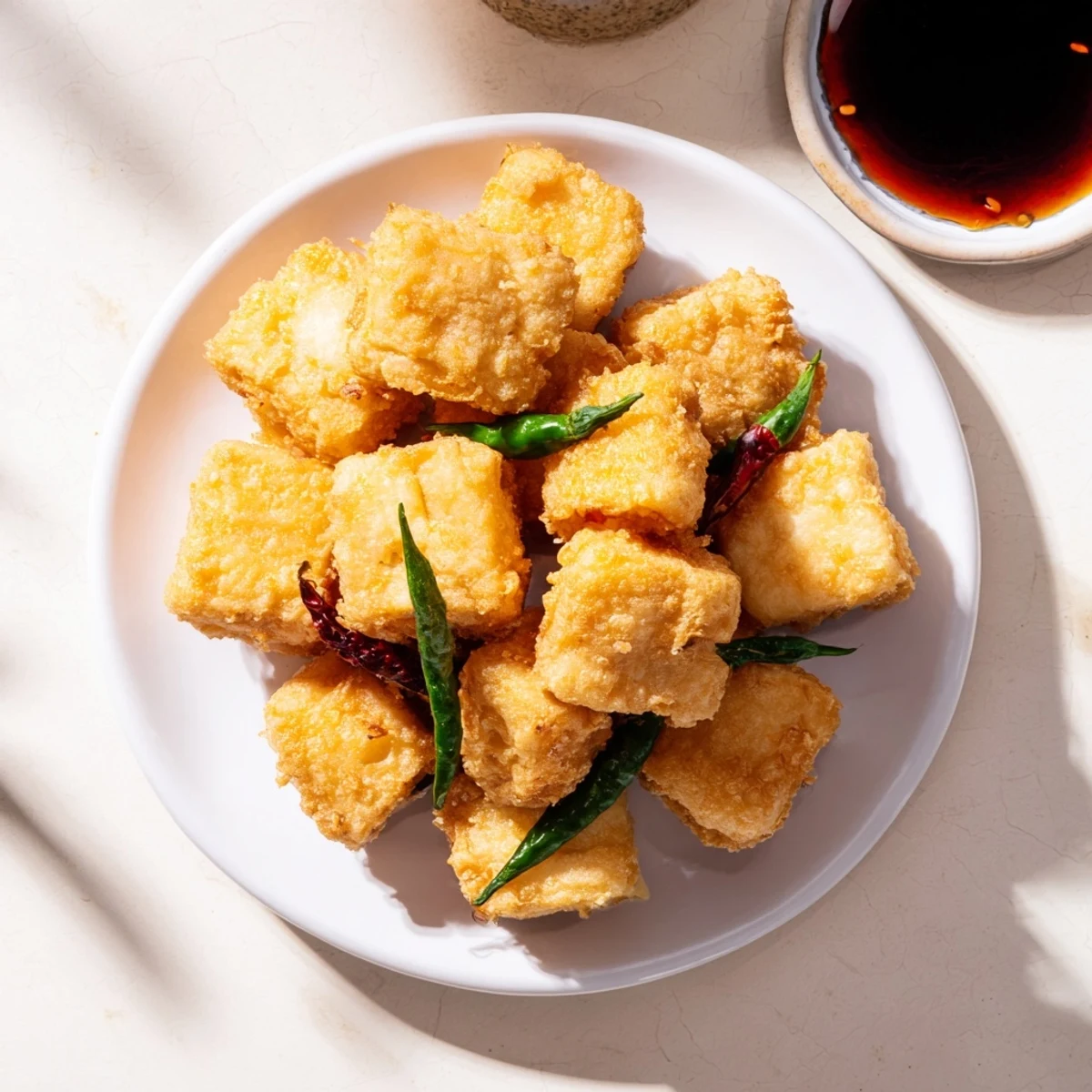
Save Tahu Sumedang brings the authentic flavors of Indonesian street food to your kitchen. These golden cubes feature a perfectly crispy exterior achieved through a light batter of rice flour and cornstarch, seasoned with aromatic garlic, white pepper, and turmeric. The tofu is first soaked in salted water for deeper flavor penetration before frying.
The preparation is straightforward: cut firm tofu into cubes, create a smooth thin batter, and fry until beautifully crisp. For restaurant-quality results, try the double-frying technique for exceptional crunch. Serve piping hot with fresh bird's eye chilies and kecap manis for that genuine Indonesian experience.
This vegan-friendly snack works wonderfully as an appetizer, light meal, or side dish alongside rice. The combination of textures—crispy outside, pillowy inside—makes each bite irresistible.
The first time I bit into Tahu Sumedang at a Jakarta street stall, the crunch was so satisfying it made me stop mid conversation. Later that week, I called my grandmother asking how to recreate that magical contrast between the golden exterior and pillowy inside. She laughed and told me the secret was in the brining, not just the frying, which completely changed how I approached tofu at home.
My college roommate and I used to make batches of these on rainy afternoons, eating them straight from the paper towel lined plate while studying. Wed argue over who got the last piece, burning our fingers on the hot tofu because we couldnt wait for them to cool down.
Ingredients
- 400 g firm tofu: Sumedang style is ideal but any firm tofu works beautifully after proper brining
- 1 tsp salt: Essential for the soaking liquid which helps season the tofu all the way through
- 2 cups water: Creates the brining bath that makes every bite flavorful
- 2 tbsp rice flour: The secret to that delicate, airy crunch
- 2 tbsp cornstarch: Helps the batter cling and creates extra crispness
- 1/2 tsp ground white pepper: Adds gentle warmth without overpowering
- 1/2 tsp garlic powder: Brings savory depth to every cube
- 1/2 tsp turmeric powder: Optional but gives the most beautiful golden hue
- 1/2 tsp salt: Balances the batter flavors
- 1/2 cup cold water: Must be cold for the smoothest batter texture
- Vegetable oil: For deep frying to achieve that perfect golden finish
Instructions
- Prepare the tofu:
- Cut the tofu into even 3 cm cubes so they cook uniformly, then dissolve salt in water and let them soak for 10 minutes. This brining step is what separates good fried tofu from great fried tofu.
- Mix the batter:
- Whisk together the rice flour, cornstarch, white pepper, garlic powder, turmeric, and salt in a bowl. Gradually stir in the cold water until you have a smooth, thin batter that coats the back of a spoon.
- Heat the oil:
- Pour enough vegetable oil into your wok or deep pan to reach 170°C. Youll know its ready when a drop of batter sizzles immediately and rises to the surface.
- Fry the tofu:
- Dip each tofu cube in the batter, let the excess drip off, then carefully lower into the hot oil. Fry for 5 to 7 minutes, turning occasionally, until each piece is deeply golden and sounds crisp when you tap it.
- Drain and serve:
- Lift the tofu out with a slotted spoon and let drain on paper towels. Serve immediately while still hot and incredibly crispy, with fresh chilies and sweet soy sauce on the side.
 Save
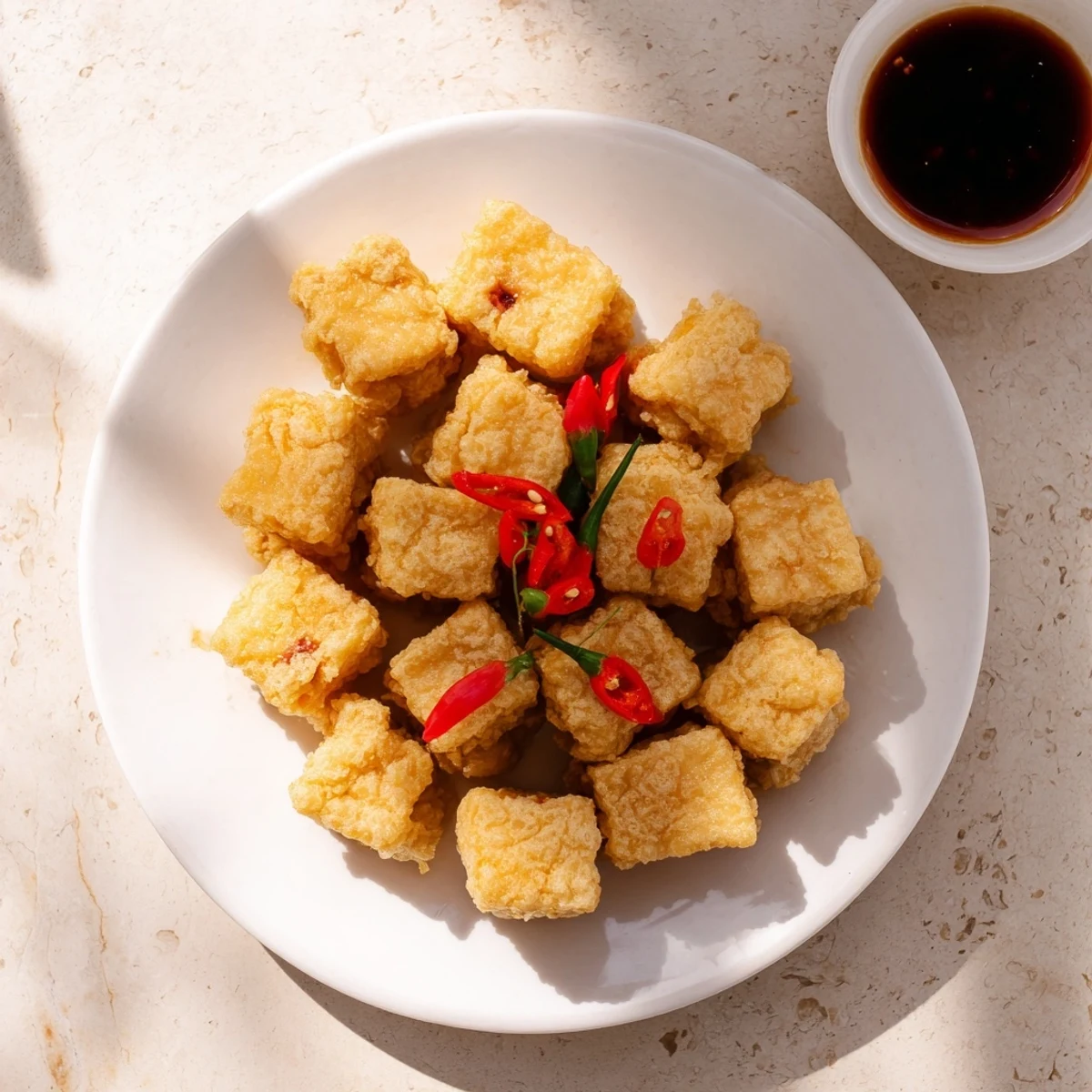
Save These have become my go to appetizer for dinner parties because they disappear within minutes and guests always ask for the recipe. Theres something universally appealing about hot, crispy food that you can eat with your hands.
Getting the Perfect Crunch
Ive learned that patting the tofu completely dry after brining makes all the difference in how well the batter adheres. Any excess moisture creates steam during frying which prevents that satisfying crunch we all want.
Making It Your Own
Sometimes I add a pinch of five spice powder to the batter for a warmer, more aromatic version. The spices bloom in the hot oil and fill the entire kitchen with the most incredible fragrance.
Serving Suggestions
In Indonesia, street vendors often serve these with a simple sambal or just fresh chilies for heat. I love setting out small bowls of different condiments so everyone can customize their own.
- Try them with a squeeze of fresh lime juice for brightness
- A drizzle of sweet soy sauce adds the perfect balance of salty and sweet
- These reheat surprisingly well in a hot oven for 5 minutes if you have leftovers
 Save
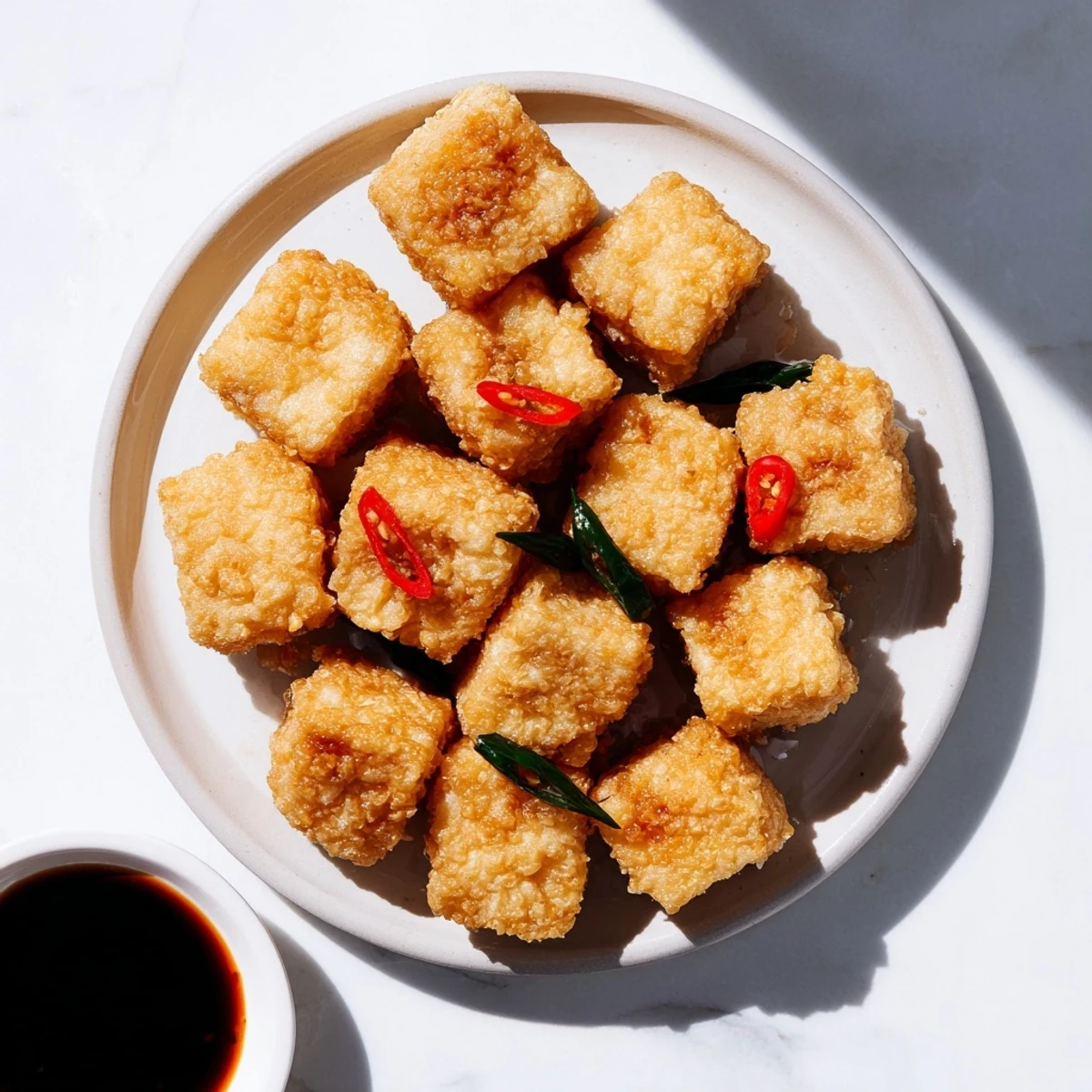
Save Hope these little golden cubes bring as much joy to your kitchen as they have to mine.
Common Questions
- → What makes Tahu Sumedang different from regular fried tofu?
-
Tahu Sumedang features a unique light batter made from rice flour and cornstarch, creating an exceptionally crispy exterior while maintaining a fluffy, tender interior. The tofu is pre-soaked in salted water for deeper seasoning, setting it apart from simple pan-fried versions.
- → Can I use regular tofu instead of Sumedang-style tofu?
-
Absolutely. Firm or extra-firm tofu works beautifully as a substitute. Press it gently before use to remove excess moisture, ensuring the batter adheres properly and achieves optimal crispiness during frying.
- → How do I achieve maximum crispiness?
-
The double-frying technique delivers the best results. Fry once until pale golden, rest for 5 minutes to let the coating set, then fry again until deep golden brown. This creates a shatteringly crisp texture that stays crunchy longer.
- → What's the ideal oil temperature for frying?
-
Maintain your oil at 170°C (340°F) for optimal results. Too cool and the tofu becomes greasy; too hot and the coating burns before the interior heats through. Use a kitchen thermometer for precision.
- → Can I make the batter ahead of time?
-
While best used immediately, the batter can be refrigerated for up to 2 hours. If it thickens, whisk in a teaspoon of cold water to return it to the proper thin consistency. The tofu should be cut and soaked just before frying.
- → What are traditional serving suggestions?
-
Serve Tahu Sumedang piping hot with fresh bird's eye chilies for heat and kecap manis (Indonesian sweet soy sauce) for a sweet-savory contrast. They're also delicious with sambal or as part of a larger Indonesian meal with rice.