
 Save
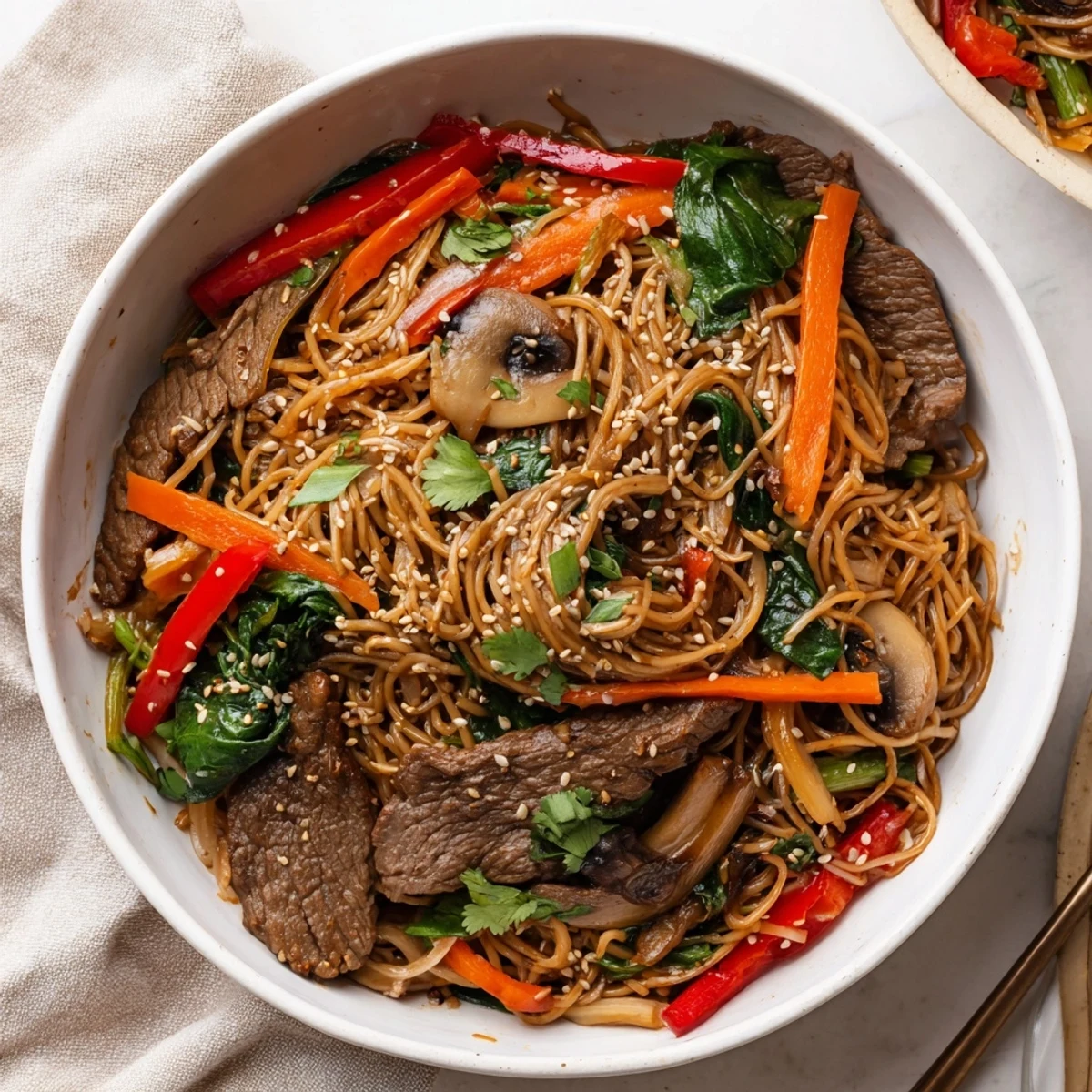
Save These Korean beef noodles feature tender marinated sirloin, colorful vegetables like carrots and bell peppers, and chewy sweet potato noodles coated in a rich gochujang-based sauce. The dish balances savory soy, sweet brown sugar, and gentle heat for a comforting meal that comes together in under an hour.
The first time I made these Korean beef noodles, my tiny apartment smelled like caramelized garlic and sesame oil for days. I had just discovered gochujang at an Asian market and couldn't wait to experiment. That spontaneous weeknight dinner turned into a regular request from everyone who tasted it.
Last winter, my sister came over feeling completely drained from work. I whipped up a double batch of these noodles, and we sat at the counter eating straight from the wok while catching up. She left with a takeout container and the recipe written on a napkin.
Ingredients
- Beef sirloin or ribeye: Thinly slicing against the grain makes every bite impossibly tender
- Sweet potato noodles: These chewy glass noodles are what make the dish authentic
- Gochujang: This Korean chili paste brings the perfect balance of sweet and heat
- Fresh vegetables: The crunch of bell peppers and carrots contrasts beautifully with the soft noodles
- Sesame oil: A little goes a long way in adding that unmistakable Korean flavor
Instructions
- Marinate the beef:
- Combine the sliced beef with soy sauce, sesame oil, sugar, and minced garlic. Let it sit while you prep everything else, letting those flavors really sink into the meat.
- Cook the noodles:
- Boil the noodles until just tender, then rinse under cold water to stop the cooking and keep them perfectly chewy.
- Whisk the sauce:
- Mix together the soy sauce, brown sugar, gochujang, rice vinegar, sesame oil, water, and ginger until the sugar dissolves completely.
- Stir fry vegetables:
- Sauté the carrots, bell peppers, and mushrooms until they start to soften, then add spinach and spring onions just until they wilt.
- Cook the beef:
- Sear the marinated beef in a hot wok until it browns nicely, letting those caramelized bits form on the bottom.
- Combine everything:
- Toss the noodles, vegetables, and beef with the sauce until every strand is glossy and coated.
- Finish and serve:
- Divide among bowls and sprinkle with sesame seeds and fresh herbs for that final pop of color.
 Save
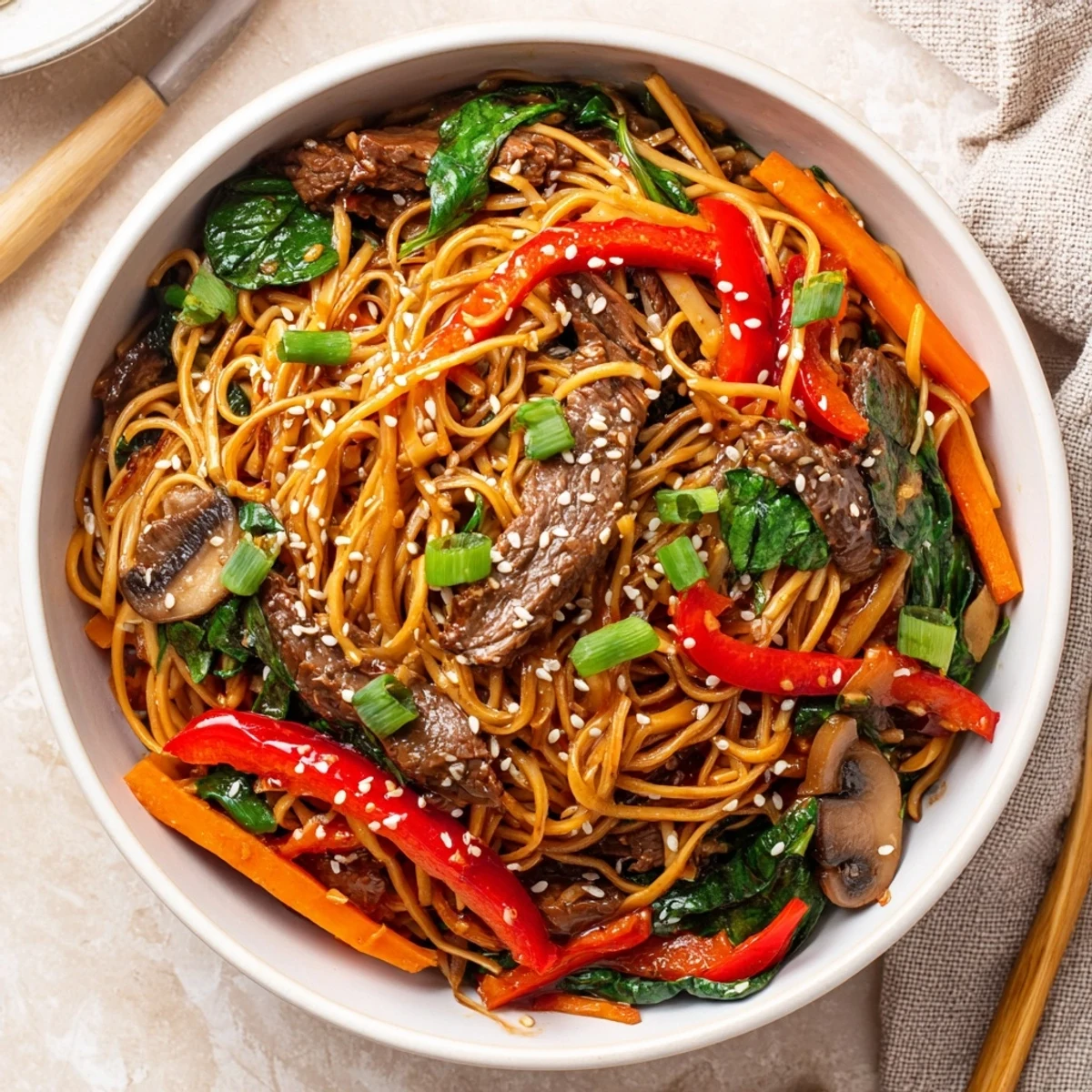
Save This recipe has become my go-to for potlucks because it travels so well. My friends actually fight over who gets to take home the leftovers, if there are any.
Getting the Perfect Noodle Texture
I learned the hard way that overcooking sweet potato noodles turns them into mush. They should have a bouncy, almost rubbery texture that stands up to the rich sauce. Trust the package timing and rinse immediately.
Building Deep Flavor
The secret to restaurant quality taste is letting the beef marinate while you prep everything else. Those 10 minutes make such a difference in the final dish, infusing the meat with garlicky sweetness before it even hits the heat.
Make It Your Own
This recipe is incredibly forgiving and welcomes substitutions based on what is in your fridge. I have made countless variations depending on the season and what looks good at the market.
- Firm tofu works beautifully as a vegetarian option
- Add extra vegetables like zucchini or snap peas for more color
- Adjust the gochujang depending on your spice tolerance
 Save
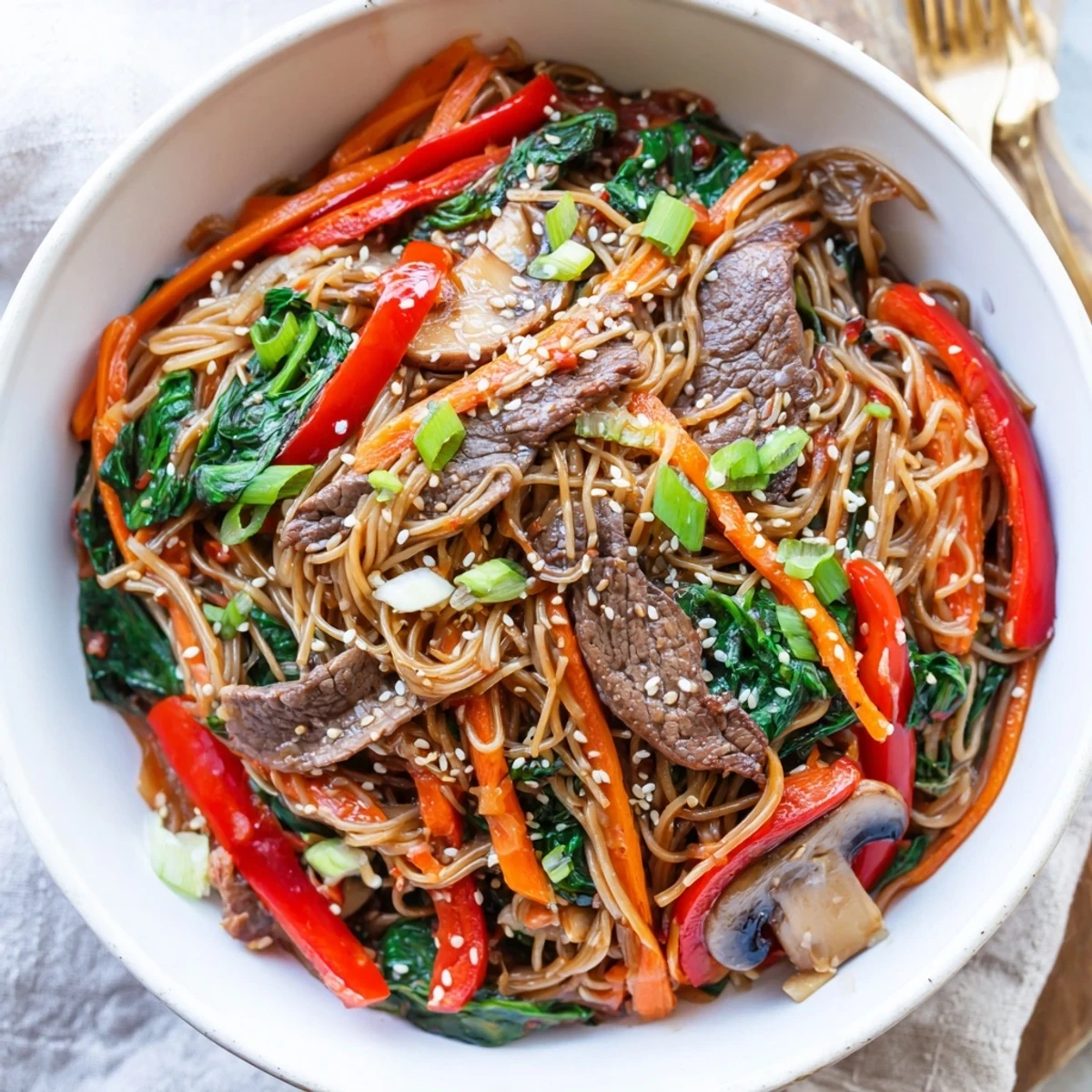
Save There is something deeply satisfying about slurping these noodles at the end of a long day. Hope this recipe brings as much comfort to your kitchen as it has to mine.
Common Questions
- → What type of noodles work best for this dish?
-
Korean sweet potato noodles (dangmyeon) are traditional and provide the perfect chewy texture. If unavailable, dried udon noodles make an excellent substitute with similar thickness and bite.
- → Can I make this dish spicy?
-
Adjust the gochujang amount to increase or decrease heat levels. For more spice, add Korean chili flakes or a drizzle of chili oil. Start with less and gradually increase to find your preferred intensity.
- → How do I prevent the beef from becoming tough?
-
Slice the beef thinly against the grain and marinate briefly to tenderize. Cook quickly over medium-high heat for just 2-3 minutes to maintain tenderness. Avoid overcooking to prevent the meat from becoming chewy.
- → Can I prepare this dish in advance?
-
The sauce and vegetable preparation can be done ahead, but cook the noodles and beef fresh for best texture. If reheating, add a splash of water to loosen the sauce and warm gently over low heat.
- → What vegetables can I substitute?
-
Zucchini, broccoli, snap peas, or cabbage work beautifully. The key is maintaining a mix of colors and textures. Slice vegetables uniformly for even cooking and a visually appealing presentation.
- → Is this dish gluten-free?
-
The traditional version contains gluten from soy sauce and noodles. To make it gluten-free, use tamari instead of soy sauce and opt for gluten-free rice noodles or verified gluten-free Korean noodles.