
 Save
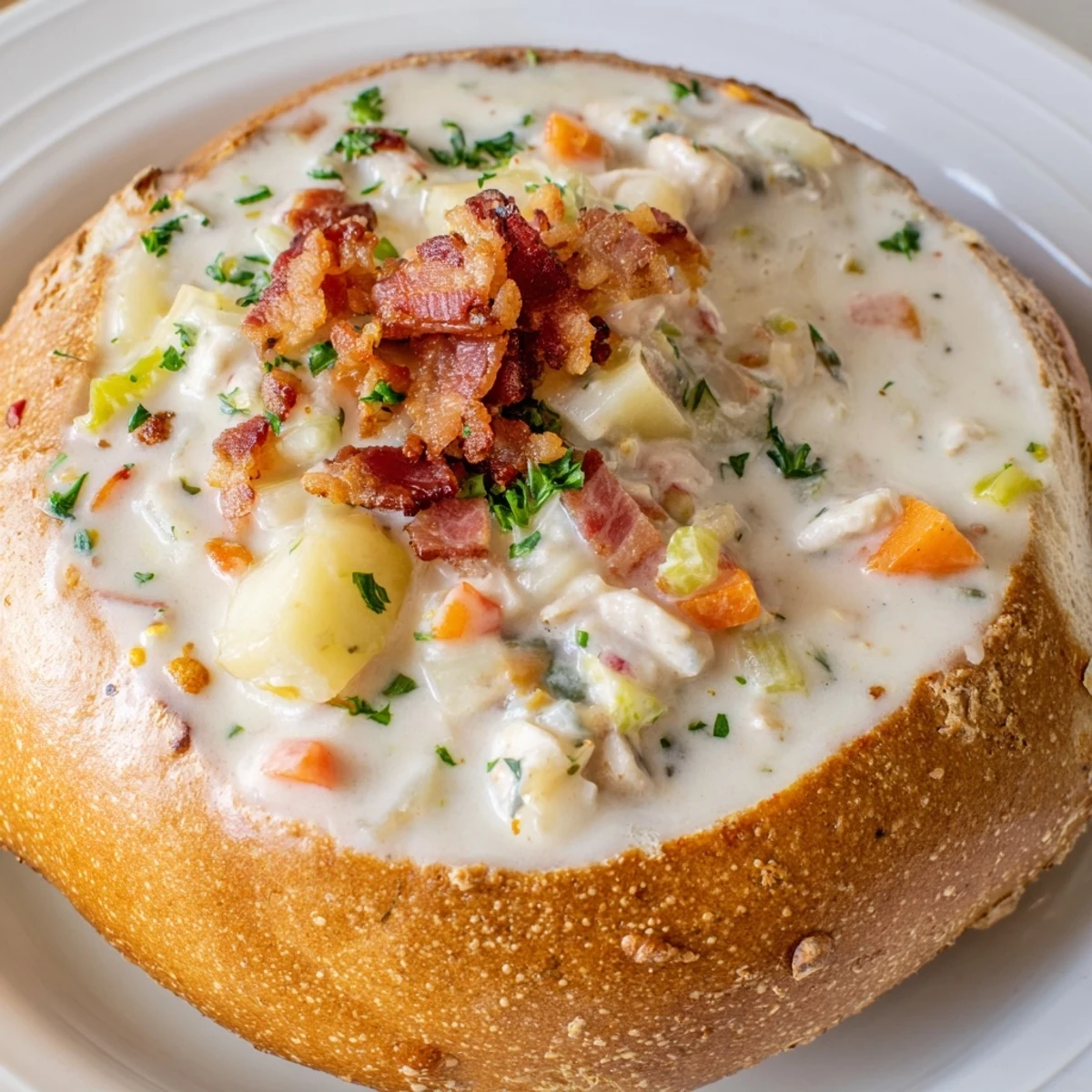
Save This creamy chowder brings together tender clams, smoky bacon, and diced potatoes simmered in a velvety cream and milk base. Aromatic vegetables and herbs enhance the flavor while being served in a crusty sourdough bread bowl. The process involves creating a roux, gradually adding clam juice and dairy for a smooth texture, and finishing with fresh parsley. Perfect for a hearty meal with a classic coastal touch.
There's something about the smell of bacon crisping in a pot that makes you forget you're cooking something meant to serve guests—it smells too good to be dinner, almost like a secret. Years ago, I watched a fishmonger in Boston hollow out sourdough bread bowls while her hands moved with the certainty of someone who'd done it a thousand times, and she told me that the bread bowl isn't just presentation, it's the best part of eating clam chowder because you get to eat the bowl itself when you're done. I've been chasing that moment ever since, and this is the version I finally got right.
I made this for my sister during a surprise visit one October when the weather turned suddenly cold, and she sat at the kitchen counter watching me work through each step like I was doing something complicated when really I was just following instinct. By the time I ladled the first bowlful into that warm bread bowl, she was already reaching for a spoon, and we didn't talk much after that except to say it was perfect.
Ingredients
- Clams: Two cans of chopped clams give you the briny heart of the soup; don't skip draining and reserving that juice because it's liquid gold for the base.
- Clam juice: Bottled clam juice fills in the gaps if your canned juice runs short and keeps the flavor consistent.
- Potatoes: Russet potatoes break down slightly and thicken the chowder naturally while staying just tender enough to find with your spoon.
- Onion, celery, and carrots: This aromatic trio is the foundation—finely chopped so they disappear into the chowder and build flavor instead of dominating it.
- Garlic: Two cloves minced fine add a whisper of depth that makes the clams taste more like themselves.
- Bacon: Four slices rendered until crisp give the chowder a smoky anchor that makes people ask what the secret ingredient is.
- Butter and cream: Unsalted butter keeps you in control of the salt, and the combination of heavy cream and whole milk makes the chowder rich without feeling heavy.
- Flour: A roux made from butter and flour thickens the chowder and prevents it from separating when the cream goes in.
- Seasonings: Salt, pepper, dried thyme, and a bay leaf are quiet but essential—taste as you go because the clams already bring salt to the party.
- Sourdough bowls: Look for small round boules about six inches across; the thickness of the bread matters because it needs to hold the weight of the chowder without collapsing.
- Fresh parsley: Chopped and stirred in at the end, it brings a green note that cuts through the richness.
Instructions
- Hollow out your bread bowls:
- Slice the tops off your sourdough boules and scoop out the center with a small knife or spoon, leaving about an inch of bread all around so the bowl stays structurally sound. Don't throw away those scraps—you can toast them or use them for breadcrumbs.
- Render the bacon:
- Dice your bacon and cook it in a large pot or Dutch oven over medium heat until the edges are crispy and the fat has rendered into the pot. This fat is going to flavor everything that comes next, so don't drain it out.
- Build the aromatic base:
- Add butter to the pot and let it melt into the bacon fat, then add your finely chopped onion, celery, carrots, and minced garlic. Stir frequently and let everything soften and turn golden at the edges, about five minutes total—you want it fragrant and beginning to caramelize slightly, not pale and steamed.
- Make the roux:
- Sprinkle in your flour and stir constantly for two minutes, letting the flour cook in the fat and turn slightly darker so it loses the raw taste. This roux will thicken your chowder and give it a silky mouthfeel.
- Whisk in the clam juice:
- Gradually add your reserved clam juice and bottled clam juice, whisking as you go to prevent lumps from forming. The mixture will start thick and then thin out into a smooth broth.
- Simmer the potatoes until tender:
- Add your diced potatoes along with the thyme, bay leaf, salt, and pepper, then bring everything to a simmer and let it bubble gently for about fifteen minutes until the potatoes are fork-tender but not falling apart. The kitchen will smell like a coastal town.
- Add the clams and dairy:
- Stir in your chopped clams, the cooked bacon bits, and both the milk and heavy cream, keeping the heat gentle so nothing boils and breaks the emulsion. Simmer for five minutes until everything is heated through, then pull out the bay leaf.
- Finish and serve:
- Taste the chowder and adjust salt and pepper to your preference—remember the clams brought their own saltiness. Stir in fresh chopped parsley, then ladle the hot chowder into your warm sourdough bowls and serve immediately.
 Save
Save The moment I learned that the bread bowl is meant to soften and become part of the soup changed how I think about serving food—it meant I wasn't just ladling chowder into bread, I was creating something where every component had a purpose and nothing was wasted. That philosophy stuck with me long after that October afternoon.
Why the Sourdough Bowl Matters
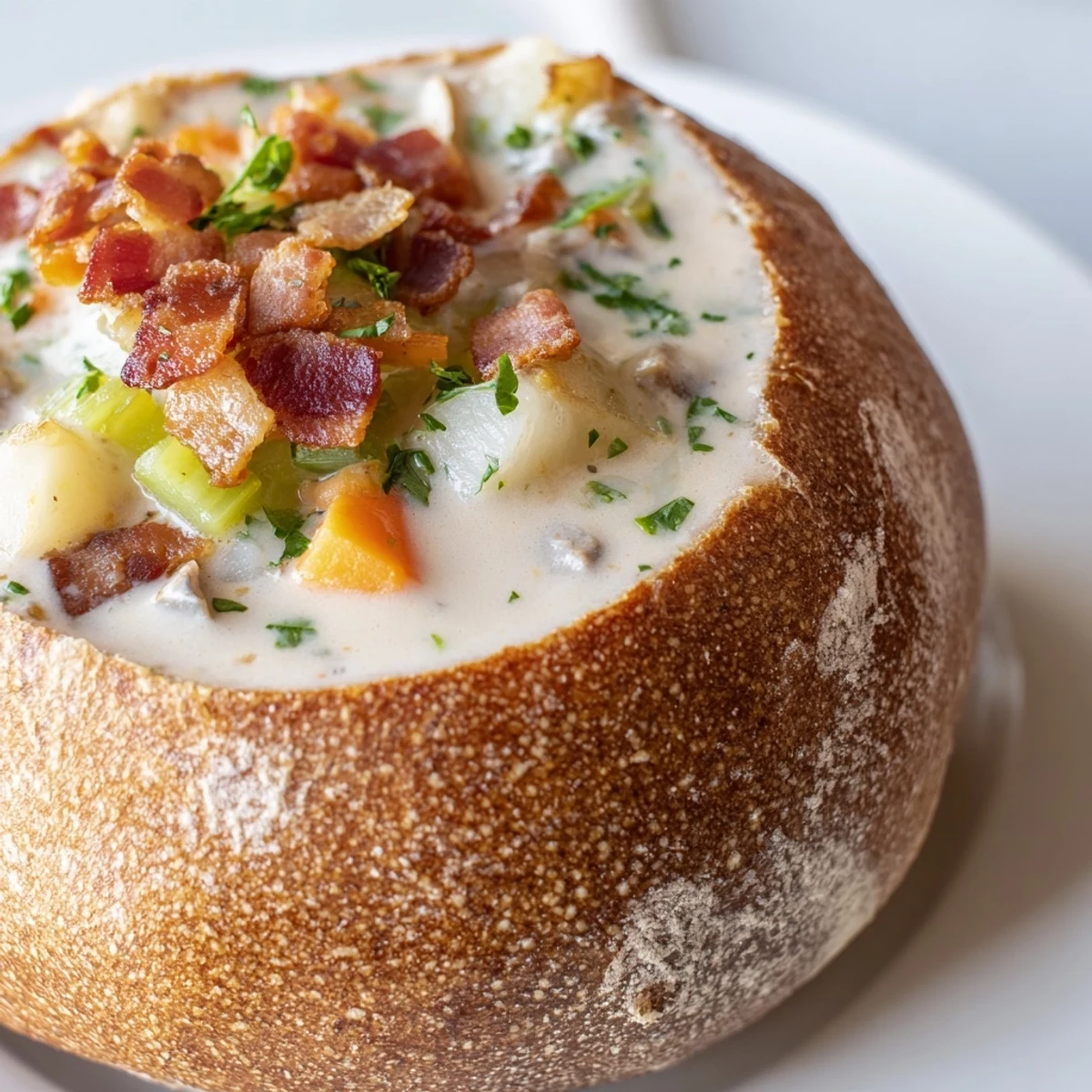
A sourdough bowl isn't fancy for the sake of it; the tangy flavor of the bread balances the richness of the cream, and as the bread soaks up chowder, it becomes almost a dumpling floating in the bowl. The crust stays crispy while the interior softens into the soup, so you're eating across different textures in every spoonful. I learned this works best when the bowl is fresh enough to still have structural integrity but old enough that it's not so soft it collapses immediately.
Timing and Temperature Control
The difference between a great clam chowder and a broken one is often just about knowing when to stop cooking and when to stay patient. The potatoes need fifteen minutes to get tender, but the clams need only five minutes in the hot liquid or they'll toughen, so the order matters. I keep the heat at a gentle simmer after the cream goes in and I listen for the smallest bubbles breaking at the surface instead of a rolling boil—that's how I know the emulsion will hold.
Flavor Layers and Customization
Every ingredient in this recipe builds on the last one, so if something tastes flat, it's usually not salt but rather the need for a touch more thyme or a squeeze of brightness. Some people add a splash of dry white wine when the clam juice goes in, and that will add complexity without tasting like wine—it just makes everything taste more like itself. If you're cooking for someone who prefers less richness, you can use half-and-half instead of heavy cream, but know that the mouthfeel will be lighter.
- Taste as you go and season gradually—it's easier to add salt than take it out.
- Save a few bacon bits to scatter on top of each bowl so you get that smoky crunch in every spoonful.
- A small pinch of Old Bay seasoning stirred in at the end can add a whisper of coastal flavor if you want to deepen the sense of place.
 Save
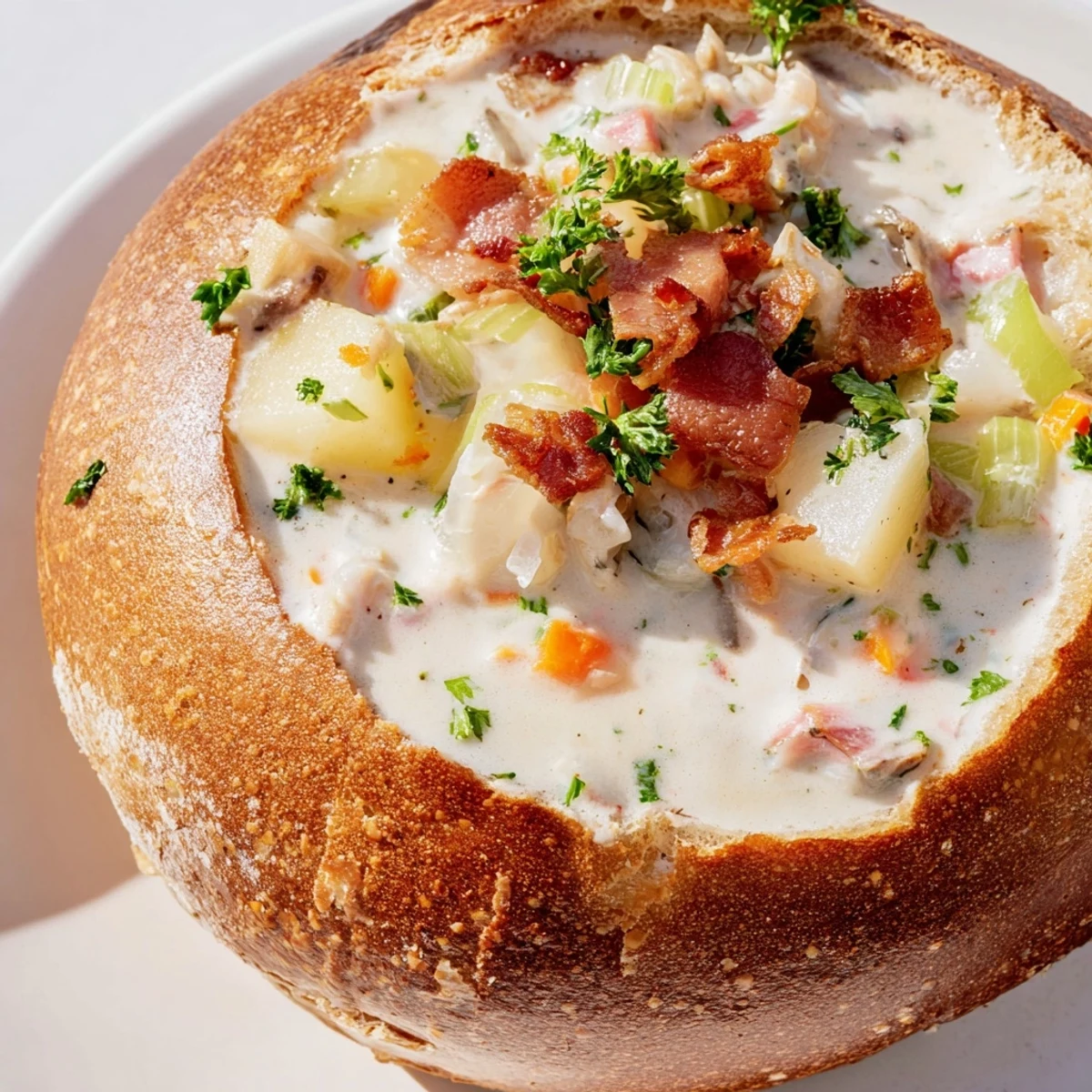
Save This chowder is the kind of dish that makes you feel like you know how to cook, even if it's your first time making it—the steps are straightforward, but the result tastes intentional and careful. Serve it on a day when people are hungry and the weather outside feels like a reason to gather around something warm.
Common Questions
- → What type of clams work best for this dish?
-
Canned chopped clams with their juice are ideal, providing convenience and rich seafood flavor that blends well with the creamy base.
- → Can I use fresh clams instead of canned?
-
Fresh clams can enhance the dish's taste but require cleaning and cooking separately. Use the clam juice from steaming to replace canned juice.
- → How do I prepare the sourdough bread bowl?
-
Slice the top off each sourdough boule and hollow out the center, leaving about a 1-inch thick shell to hold the chowder without leaking.
- → What thickening method is used for this chowder?
-
A roux made from butter and flour is sautéed before gradually adding clam juice and dairy, creating a rich and smooth texture.
- → How do I add smoky flavor to the chowder?
-
Diced bacon is cooked crisp then stirred into the chowder, imparting a savory, smoky depth that balances the seafood elements.
- → Can this dish be made dairy-free?
-
For a dairy-free version, consider substituting cream and milk with plant-based alternatives, though it will alter the creamy texture.