
 Save
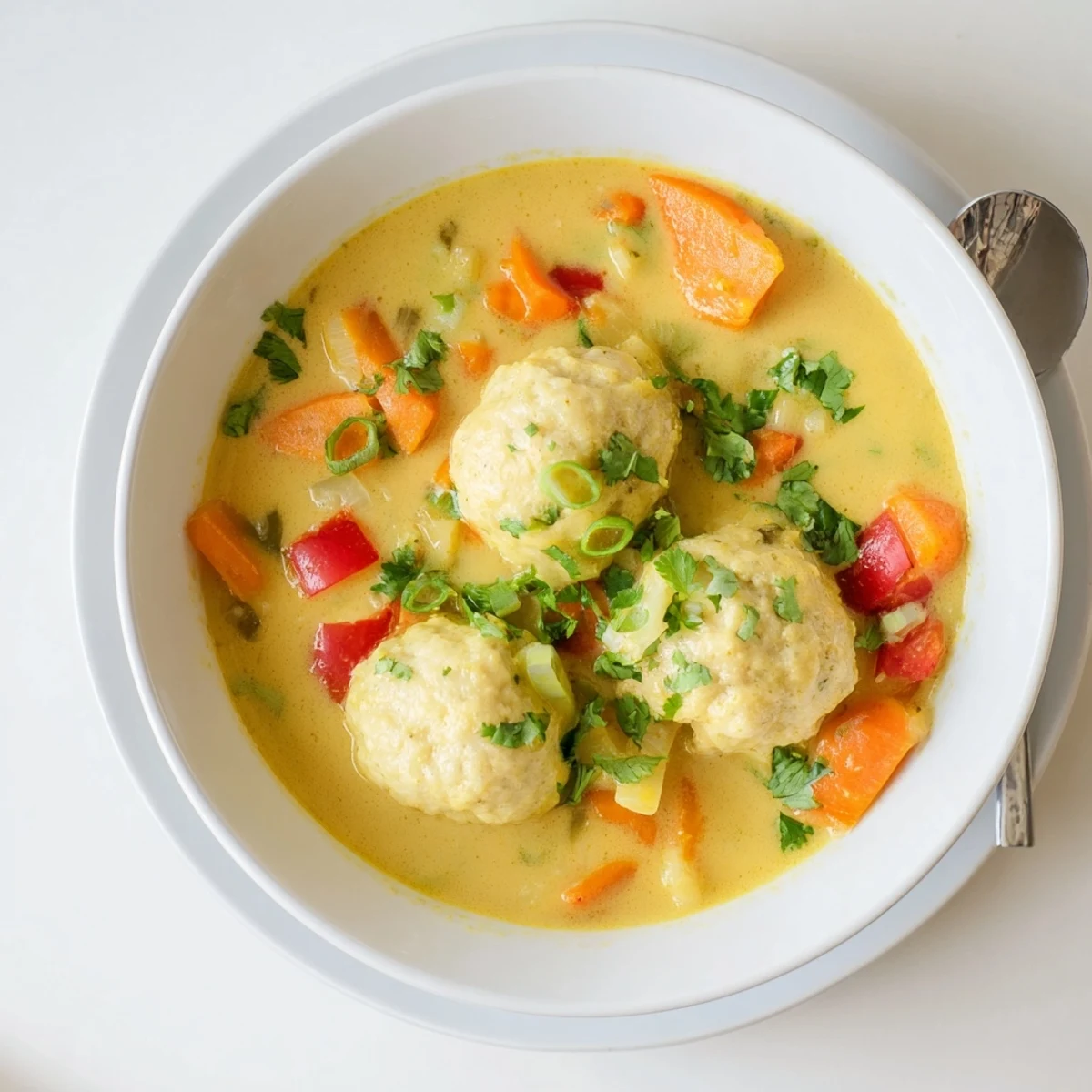
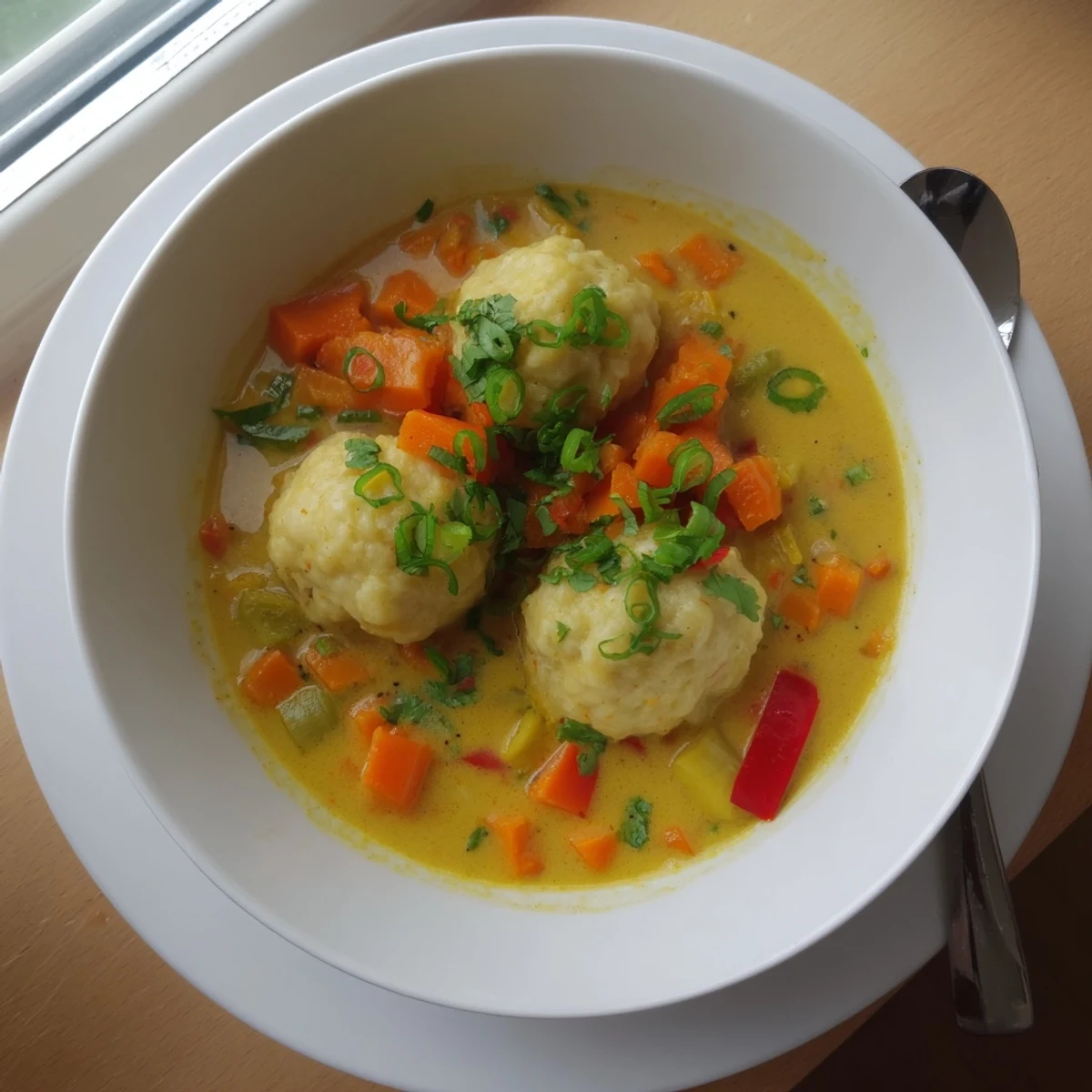
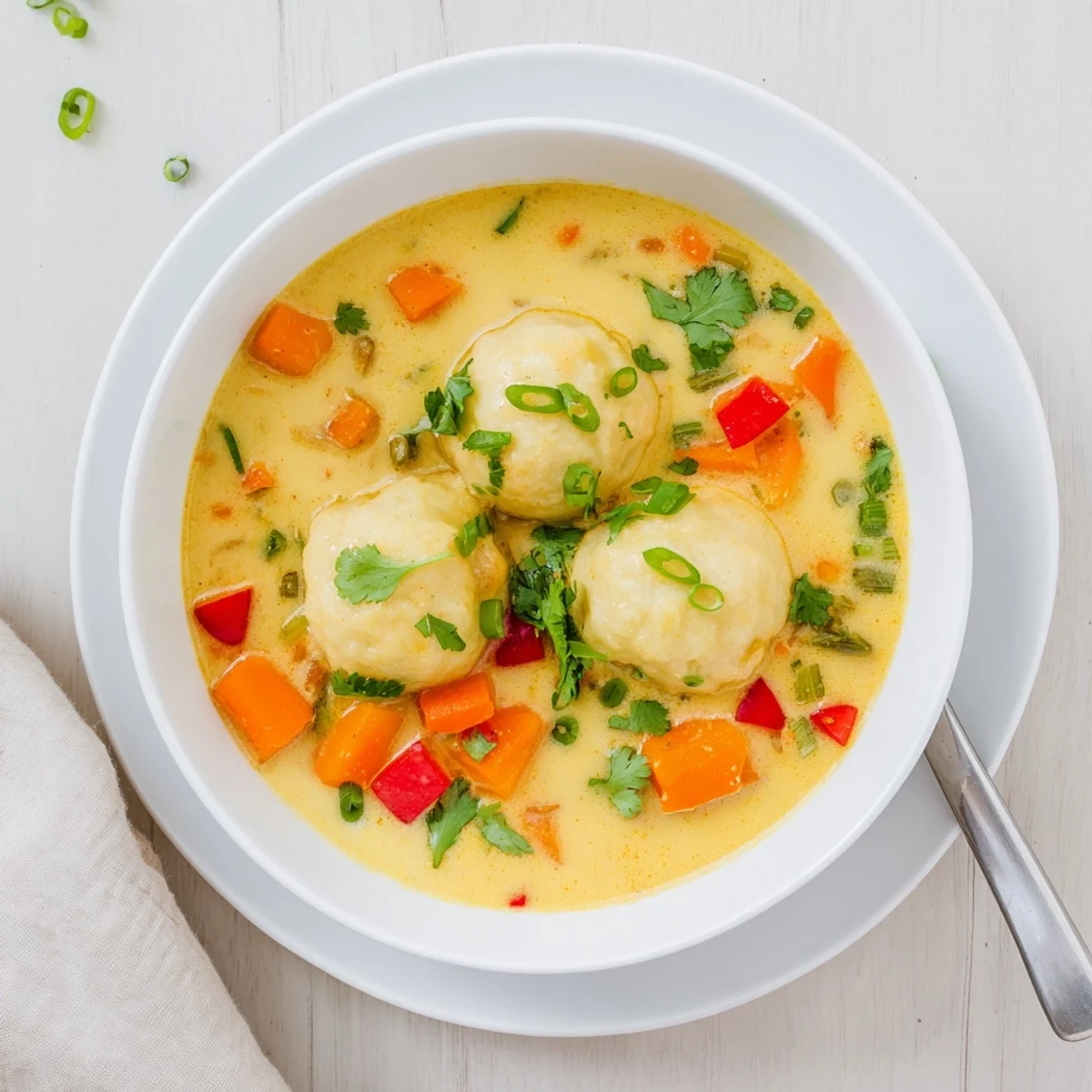
Save This warming Southeast Asian-inspired soup combines rich coconut milk with aromatic yellow curry and turmeric. The broth is loaded with colorful vegetables like carrots, bell peppers, and zucchini, while light fluffy dumplings simmer directly in the pot for ultimate comfort. Ready in just 45 minutes with only 20 minutes of active prep, this vegetarian bowl is perfect for weeknight dinners or meal prep. Customize with your favorite vegetables, add tofu for protein, or adjust the spice level to your preference.
The first time I made coconut curry soup was during a rainy autumn when I needed something that felt like a warm hug in a bowl. I was experimenting with dumplings after remembering how my grandmother would drop spoonfuls of dough into chicken stew, and I wondered if that comforting technique would work with the bold flavors of curry. When that first spoonful hit my tongue—creamy coconut, aromatic spices, and a pillowy dumpling all at once—I knew this was going to be a regular rotation in my kitchen. Now whenever friends come over feeling under the weather or just needing comfort, this is what I make without hesitation.
Last winter my neighbor came over shivering after her car broke down, and I literally had this soup on the table in forty minutes. She kept asking what restaurant I ordered it from, and when I told her I made it, she demanded the recipe right there at my kitchen table. Now she makes it every Sunday and texts me photos of her variations—sometimes she adds sweet potato, sometimes she makes it spicier than I dare. That is the kind of recipe this is, one that invites you to make it your own while still delivering that same comforting magic every time.
Ingredients
- 1 tablespoon vegetable oil: A neutral base that lets the spices shine without competing flavors
- 1 medium onion, finely chopped: The foundation that builds sweetness as it softens
- 3 garlic cloves, minced: Fresh is non-negotiable here—jarred garlic loses its punch too quickly
- 1 tablespoon fresh ginger, grated: Peel it with a spoon to avoid wasting the aromatic flesh just under the skin
- 2 tablespoons yellow curry powder: Use your favorite brand or blend your own if you are feeling adventurous
- 1 teaspoon ground turmeric: Adds that beautiful golden color and earthy undertones
- 1 medium carrot, sliced: Holds its texture nicely in the simmering broth
- 1 red bell pepper, diced: Brings a subtle sweetness and vibrant color contrast
- 1 medium zucchini, diced: Absorbs flavors beautifully while maintaining just enough bite
- 1 (14 oz / 400 mL) can coconut milk, full-fat preferred: The full fat version creates that restaurant-quality richness you cannot fake
- 4 cups vegetable broth: Low-sodium lets you control the seasoning perfectly
- 2 tablespoons soy sauce or tamari: Adds depth and umami that balances the sweet coconut
- 1 tablespoon lime juice: Fresh squeezed only—bottled juice cannot compare
- 1 teaspoon sugar: Just enough to round out the sharp edges of the curry and lime
- Salt and black pepper, to taste: Trust your palate and adjust at the end
- 1 cup all-purpose flour: You can use a gluten-free blend if needed, though the texture may vary slightly
- 1 1/2 teaspoons baking powder: Essential for getting those light and fluffy dumplings
- 1/2 teaspoon salt: Dumplings need seasoning too or they will taste bland against the flavorful soup
- 2 tablespoons chopped fresh cilantro: Optional but recommended for little bursts of herbaceous brightness
- 1/2 cup milk or coconut milk: The liquid that brings the dumpling dough together
- 2 tablespoons vegetable oil: Keeps the dumplings tender even after they cook in the soup
Instructions
- Build your aromatic base:
- Heat the oil in your large pot over medium heat, then add the chopped onion and let it soften until it turns translucent—about 3 minutes. You want it fragrant and sweet, not browned or crispy.
- Wake up the garlic and ginger:
- Stir in the minced garlic and grated ginger, cooking for just 1 minute until you can smell them throughout your kitchen. Watch closely because garlic can turn bitter if it browns.
- Bloom your spices:
- Add the curry powder and turmeric, stirring constantly for 30 seconds. This step releases the essential oils and intensifies the flavors—the mixture will become fragrant and almost paste-like.
- Add your vegetables:
- Toss in the carrot, bell pepper, and zucchini, sautéing for 2 to 3 minutes. They do not need to cook through completely since they will simmer in the broth later.
- Create the soup base:
- Pour in the coconut milk and vegetable broth, then stir in the soy sauce, lime juice, sugar, salt, and pepper. Bring everything to a gentle boil while stirring to combine all the flavors.
- Prepare the dumpling batter:
- While the soup heats, whisk together the flour, baking powder, salt, and cilantro in a separate bowl. Add the milk and oil, mixing gently with a spoon until just combined—overworking the dough makes tough dumplings.
- Drop the dumplings into the soup:
- Once the soup is boiling, reduce the heat to a simmer. Use a tablespoon to drop small portions of dough directly into the broth, spacing them apart so they have room to expand.
- Cover and let the magic happen:
- Put the lid on the pot and simmer for 12 to 15 minutes without lifting it. The dumplings need that enclosed steam environment to puff up properly and cook through evenly.
- Final touches and serving:
- Taste the soup and adjust the seasoning if needed, then serve hot with your choice of garnishes. The dumplings should be fluffy and light, floating beautifully in that golden curry broth.
 Save
Save My sister texted me at midnight once saying she had just made this for her family after a particularly hard day, and her daughter asked if she could please have it for her birthday dinner instead of cake. There is something about dumplings floating in soup that feels deeply nurturing, like being wrapped in a blanket on the couch while rain taps against the windows. That is the power of simple comfort food made with care.
Making It Your Own
I have found that adding cubed tofu or drained chickpeas during the last 5 minutes of simmering turns this into a more substantial meal without changing the cooking time. Sweet potato also works beautifully in place of the carrot and adds even more body to the broth.
The Dumpling Secret
After years of making these, I discovered that letting the dumpling batter rest for 5 minutes before dropping it into the soup makes them even lighter. The flour absorbs the liquid more evenly, creating that perfect cloud-like texture inside.
Ahead And Storage
This soup actually tastes better the next day as the spices continue to meld together. Store it in the refrigerator for up to 3 days, though the dumplings will soften as they sit in the broth. For the best leftovers, keep the dumplings separate and reheat them gently in the soup just before serving.
- The dumplings freeze beautifully if you want to make a double batch
- Reheat frozen dumplings directly in simmering broth without thawing first
- Add a splash of coconut milk when reheating to restore creaminess
 Save
Save Whether you are feeding a crowd or just yourself, this soup has a way of making any evening feel special and cared for. Sometimes the simplest meals are the ones that stay with us longest in our memories.
Common Questions
- → Can I make the dumplings gluten-free?
-
Yes, substitute all-purpose flour with a gluten-free flour blend and use tamari instead of soy sauce. The texture remains light and tender.
- → How do I store leftovers?
-
Store in an airtight container in the refrigerator for up to 3 days. The dumplings will absorb some liquid, so add extra broth when reheating.
- → Can I freeze this soup?
-
Freeze the soup base without dumplings for up to 3 months. Add fresh dumplings when reheating for the best texture.
- → What protein can I add?
-
Cubed firm tofu, cooked chickpeas, or shredded chicken work beautifully. Add during step 5 so protein heats through with the broth.
- → How can I make it spicier?
-
Add fresh minced chili peppers with the garlic, stir in red curry paste, or sprinkle with red chili flakes when serving. Adjust gradually to taste.
- → Can I use other vegetables?
-
Absolutely. Try sweet potato, butternut squash, green beans, or spinach based on seasonality. Add hearty vegetables earlier, delicate greens at the end.