
 Save
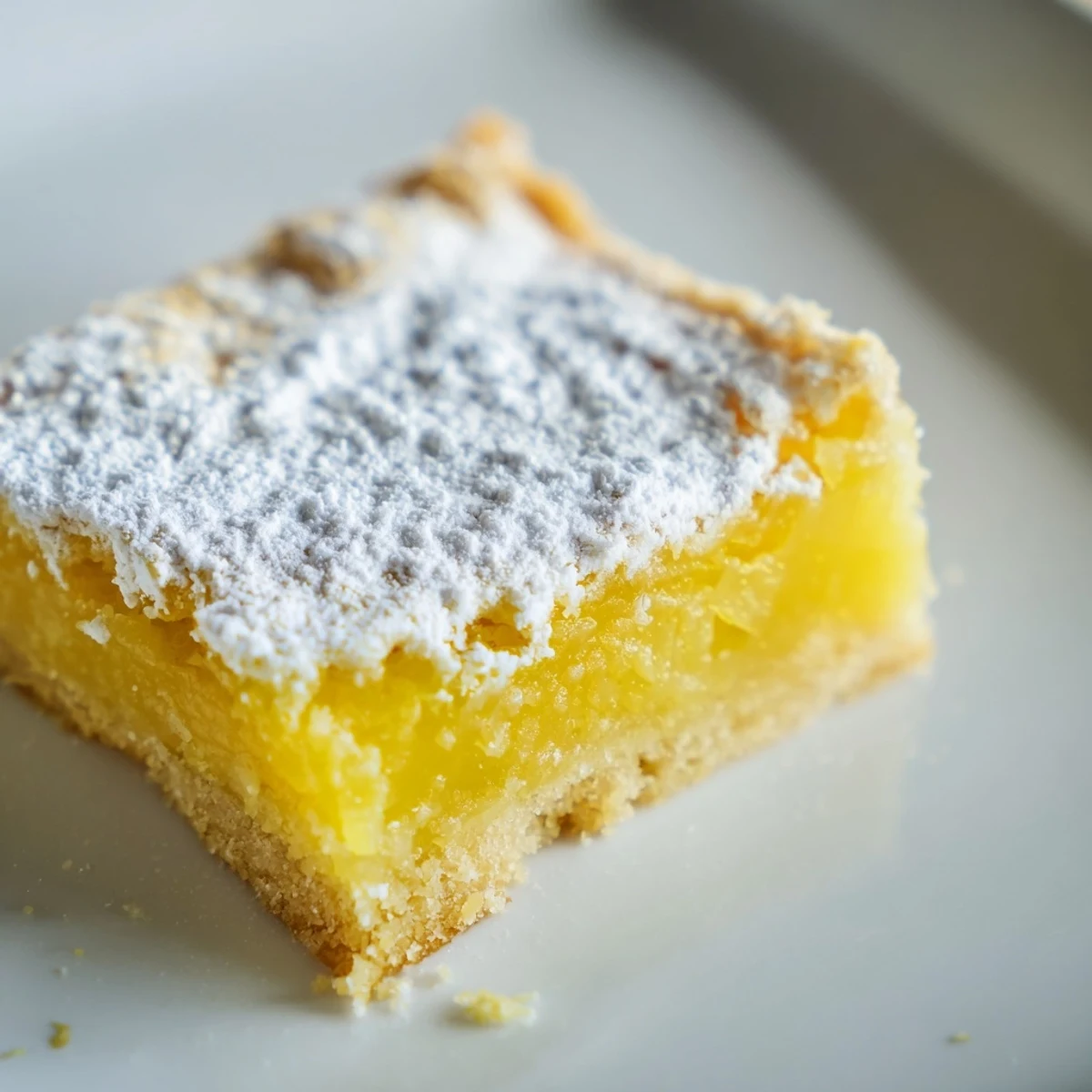
Save These classic lemon bars combine a tender, buttery shortbread base with a smooth citrus filling that strikes the perfect balance between sweet and tangy. The crust bakes first until lightly golden, then a fresh lemon mixture gets poured over while hot for ideal texture integration.
After baking, the bars must cool completely to achieve that signature clean slice. A generous dusting of powdered sugar adds the finishing touch. The process takes about 15 minutes of active prep, with two short baking sessions and a cooling period.
For the brightest flavor, use freshly squeezed lemon juice and freshly zested citrus. Meyer lemons work beautifully if you prefer a sweeter, less acidic profile. Chilling before cutting ensures those picture-perfect clean edges.
The afternoon sun hit my kitchen window just right as I zested those first lemons, releasing that unmistakable citrus perfume that somehow makes everything feel lighter. I had promised to bring dessert to a friend's backyard gathering that evening, and something about the warm weather had me craving bright, tangy flavors instead of the usual chocolate fare. These lemon bars ended up being the perfect choice
When I pulled that pan from the oven, the entire house smelled like a sunny morning. My roommate wandered into the kitchen, following her nose, and immediately asked what bakery I had visited. Seeing her eyes light up when I told her I had made them from scratch
Ingredients
- 1 cup (225 g) unsalted butter, softened: Room temperature butter is absolutely crucial here, so it creams properly with the sugar and creates that melt in your mouth texture
- 1/2 cup (100 g) granulated sugar: This sweetens the crust just enough to complement the tart filling without becoming cloying
- 2 cups (250 g) all-purpose flour: Gives the shortbread structure while still staying tender
- 1/4 tsp salt: A tiny pinch that elevates all the flavors and keeps the crust from tasting flat
- 1 and 1/2 cups (300 g) granulated sugar: The filling needs plenty of sweetness to balance that assertive lemon acidity
- 1/4 cup (30 g) all-purpose flour: This small amount helps the filling set properly without making it grainy or heavy
- 4 large eggs: Room temperature eggs will incorporate more smoothly into the filling mixture
- 2/3 cup (160 ml) freshly squeezed lemon juice: Fresh juice cannot be substituted, as bottled lemon juice lacks the vibrant complexity we want
- 1 tbsp lemon zest: This is where all those aromatic citrus oils live, so do not skip this step
- Powdered sugar, for dusting: The final touch that makes these look professionally finished
Instructions
- Preheat and prepare your pan:
- Set your oven to 350°F (175°C) and line a 9x13 inch pan with parchment paper, letting some hang over the sides like little handles
- Make the shortbread crust:
- Beat the softened butter and 1/2 cup sugar until fluffy, then fold in 2 cups flour and salt, mixing just until the dough comes together
- Press and partially bake:
- Press the dough into your prepared pan in an even layer, then bake for 18 to 20 minutes until it is pale gold
- Whisk the filling:
- Combine the remaining sugar and flour in a bowl, then whisk in eggs, lemon juice, and zest until completely smooth
- Add filling and finish baking:
- Pour the lemon mixture directly onto the hot crust and return to the oven for another 18 to 20 minutes until the center is just set
- Cool completely:
- Let the bars cool fully in the pan, then use the parchment to lift them out before slicing into 16 pieces and dusting with powdered sugar
 Save
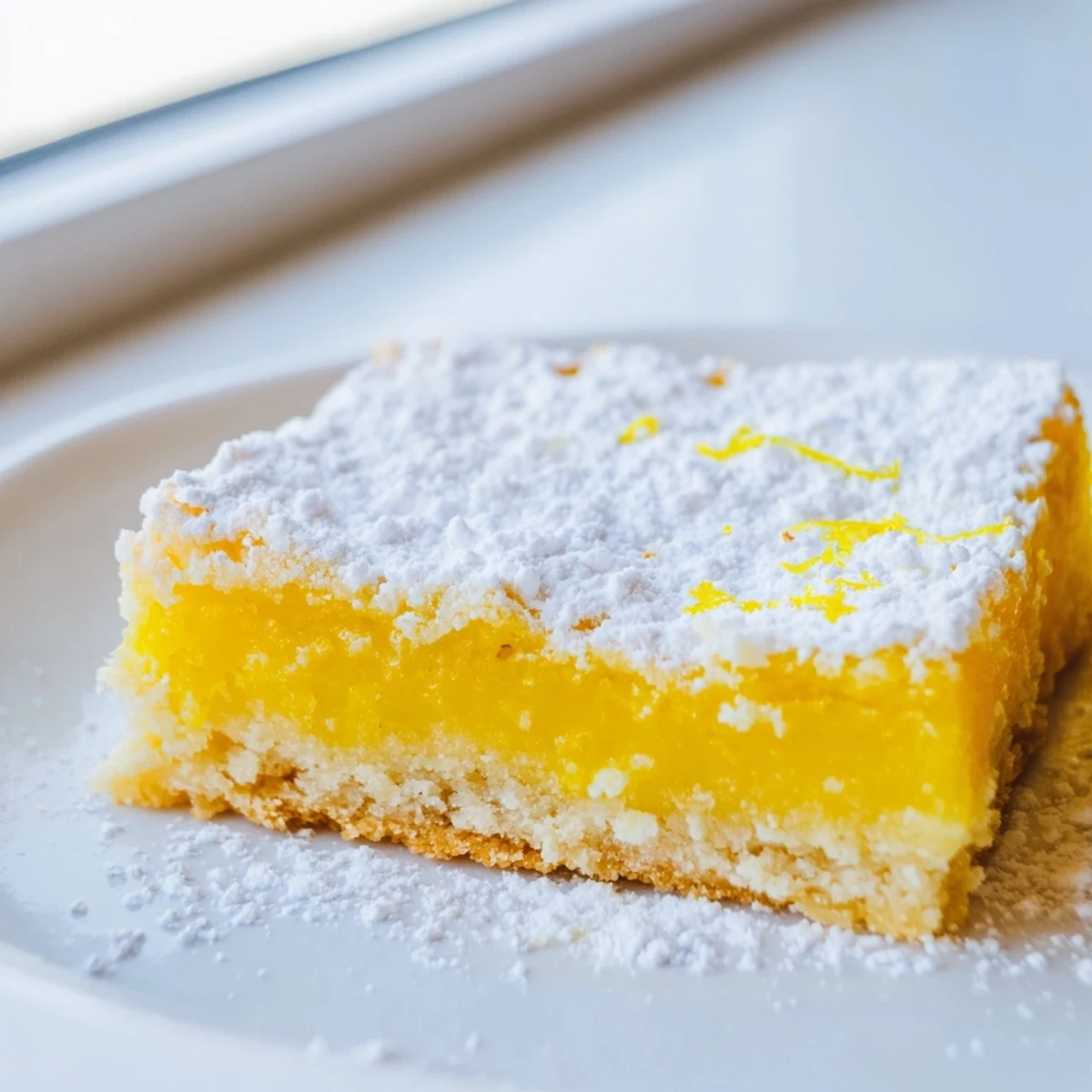
Save Those lemon bars disappeared faster than anything else at the party. My friend asked for the recipe before I had even taken off my coat, and now they have become her go to dessert for every summer gathering
Choosing Your Lemons
I have learned through trial and error that thinner skinned lemons tend to yield more juice, while the thicker skinned ones give you more zest for your effort. Rolling each lemon firmly on the counter before cutting breaks down the internal membranes and helps release every drop
Getting Clean Slices
Nothing is more frustrating than a gorgeous lemon bar that sticks to the knife and falls apart. Chilling the pan completely before slicing, and wiping your knife between cuts, gives you those picture perfect edges every time
Make Ahead Magic
These actually improve after a day in the refrigerator, as the flavors meld and the texture becomes even more refined. This makes them ideal for entertaining
- Press the crust into the pan the night before and keep it wrapped in the fridge
- Mix your filling ahead of time and store it in a sealed container
- Dust with powdered sugar right before serving, as humidity can make it dissolve
 Save
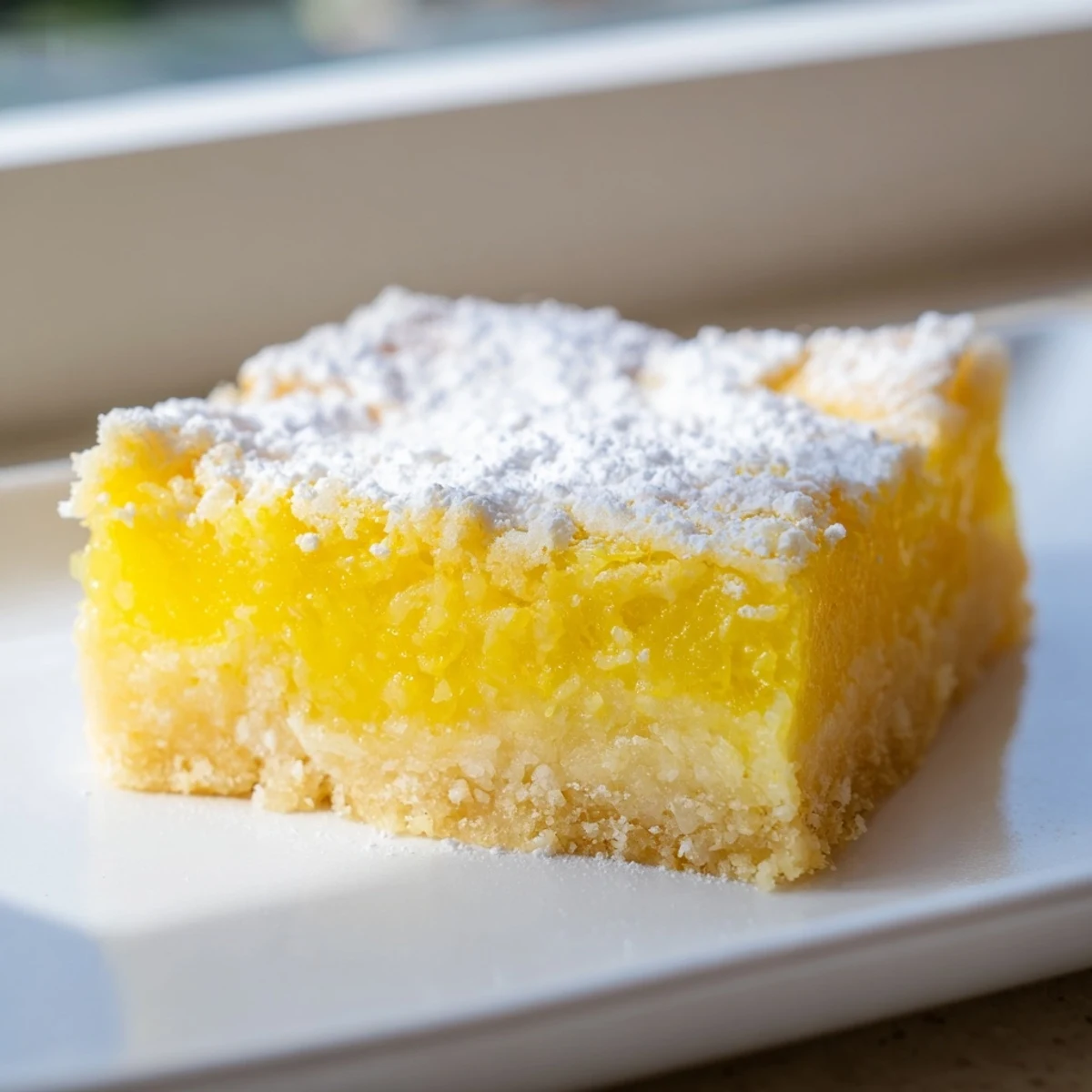
Save There is something deeply satisfying about a dessert that balances buttery comfort with bright acidity. These lemon bars have earned their permanent place in my baking rotation
Common Questions
- → How long should lemon bars cool before cutting?
-
Let the bars cool completely in the pan at room temperature, about 1-2 hours. For cleanest slices, refrigerate for 30 minutes before cutting. The filling needs to fully set to maintain its shape.
- → Can I use bottled lemon juice instead of fresh?
-
Fresh lemon juice delivers the brightest, most vibrant flavor. Bottled juice can work in a pinch but may result in a more muted taste. For the best results, squeeze fresh lemons and use the zest for extra citrus essence.
- → Why do I pour the filling over a hot crust?
-
Pouring the lemon mixture over the hot crust helps the layers bond together, preventing separation. The heat also starts cooking the bottom of the filling immediately, creating that smooth, custard-like texture throughout.
- → How do I know when lemon bars are done baking?
-
The filling is done when it's just set in the center—it should still have a slight jiggle but not be liquid. The edges will be lightly golden. Overbaking leads to a rubbery texture, so watch closely during those final minutes.
- → Can I freeze lemon bars?
-
Yes, freeze baked and cooled bars in an airtight container with parchment between layers. They'll keep for 2-3 months. Thaw in the refrigerator overnight and add powdered sugar just before serving for the freshest appearance.
- → What's the difference between regular and Meyer lemons?
-
Meyer lemons are a cross between regular lemons and mandarin oranges, resulting in a sweeter, less acidic flavor with floral notes. They're perfect if you prefer a milder citrus taste. Regular lemons deliver that classic bright tang.