
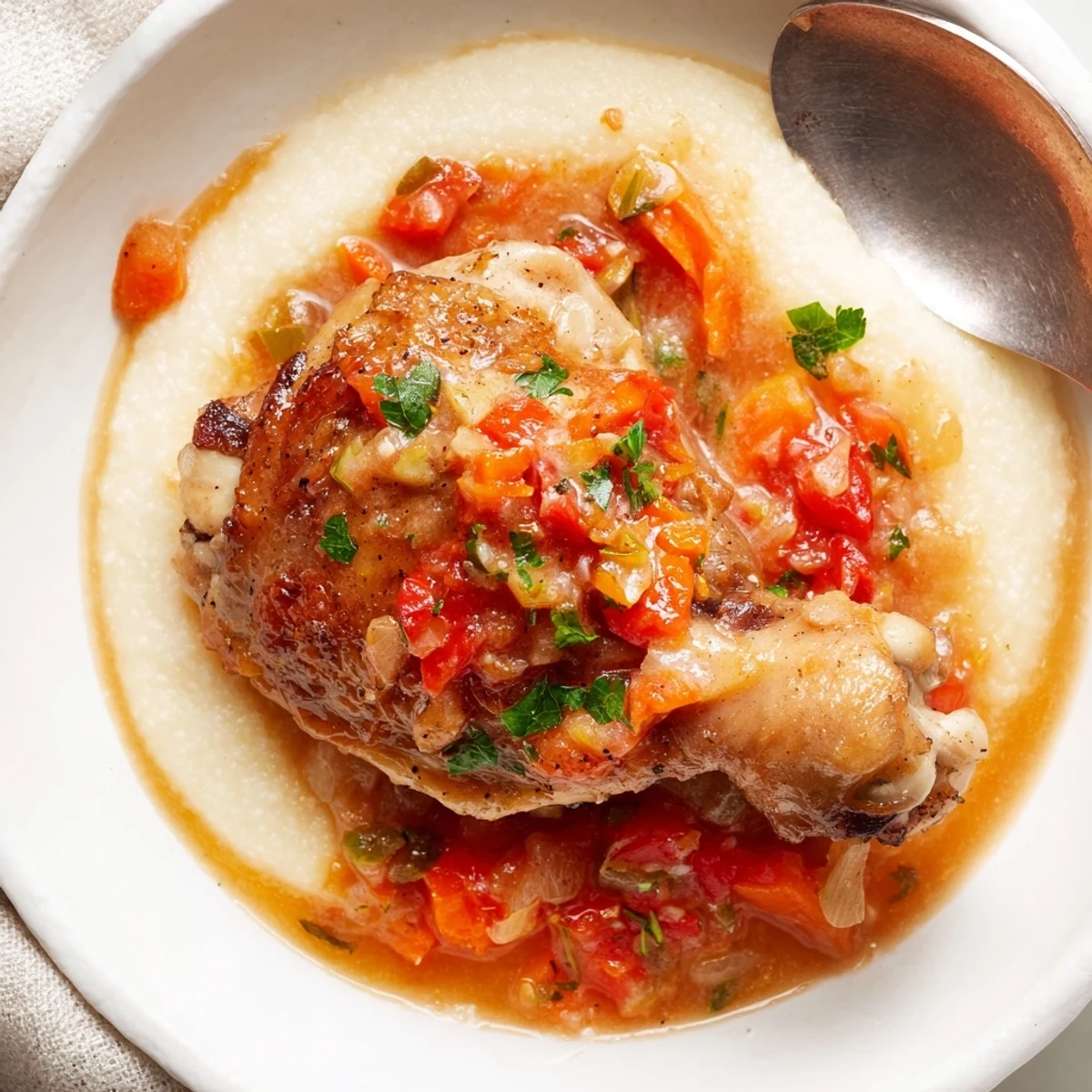
 Save
Save This osso bucco-style preparation uses bone-in chicken thighs browned until golden, then slowly braised with onion, carrots, celery, garlic, diced tomatoes, white wine and chicken stock. Simmer gently for about an hour until meat is tender; uncover for the final 15 minutes to concentrate the sauce. Finish with lemon zest and chopped parsley and serve over polenta, mashed potatoes or with crusty bread. A splash of balsamic or a few anchovy fillets will deepen the savory profile.
The screen door slammed shut behind me as I carried a Le Creuset dutch oven into my friends kitchen during a weekend trip to the coast, determined to prove that osso bucco did not require veal shanks or a restaurant budget. Chicken thighs, I argued, would deliver the same melting tenderness if given the right bath of wine and tomatoes. Nobody believed me until the lid came off an hour later and the smell silenced every skeptic at the table. That pot was scraped clean before the sunset even finished.
My friend Maria leaned over the counter with a glass of Pinot Grigio in hand, watching me dump vegetables into the pot, and asked why I was not just ordering pizza like a normal person. By the time the chicken was falling off the bone and the sauce had reduced to a glossy brick red, she had stopped asking questions and started setting the table.
Ingredients
- 8 bone in, skinless chicken thighs: Bone in thighs hold their shape during braising and deliver far more flavor than boneless cuts, so do not be tempted to swap them out.
- 1 large onion, finely diced: The onion melts into the sauce and creates a sweet base that balances the acidity of the tomatoes.
- 2 carrots, diced: Dice them small so they dissolve slightly and naturally thicken the braising liquid.
- 2 celery stalks, diced: Celery adds an earthy depth that you will miss if you skip it, even if you think you dislike celery.
- 4 cloves garlic, minced: Fresh garlic is non negotiable here, added late so it does not turn bitter.
- 1 can (400g) diced tomatoes: A good quality canned tomato will outperform fresh out of season tomatoes every time.
- Zest of 1 lemon: Stirred in at the end, the zest lifts the entire dish and cuts through the richness like nothing else.
- 1/4 cup chopped flat leaf parsley: Use flat leaf, never curly, and add it at the very last moment for a hit of freshness.
- 1 cup dry white wine: Something you would actually drink, because cooking wine is a lie that ruins good food.
- 1 1/2 cups chicken stock: Low sodium gives you control over the final seasoning.
- 1/4 cup all purpose flour (or gluten free alternative): A light dredge creates a golden crust and helps thicken the sauce as it simmers.
- 2 tbsp olive oil: Use a decent oil since it is the foundation of every flavor that follows.
- 1 tsp salt and 1/2 tsp black pepper: Season the chicken generously before dredging for even flavor throughout.
- 1/2 tsp dried thyme and 1 bay leaf: These quiet herbs work in the background to give the sauce an herbal backbone.
Instructions
- Prep and dredge the chicken:
- Pat the chicken thighs completely dry with paper towels, season both sides with salt and pepper, then dredge them lightly in flour and shake off every bit of excess. Wet chicken will not brown, and too much flour will make the sauce gummy.
- Sear until golden:
- Heat olive oil in a large heavy bottomed pot over medium high heat until it shimmers, then lay the thighs in without crowding and let them develop a deep golden crust, about 4 minutes per side. Do not fuss with them, let the pan do the work, then remove and set aside on a plate.
- Build the vegetable base:
- In the same pot with all those beautiful browned bits still clinging to the bottom, toss in the onion, carrots, and celery, and sauté for 5 to 6 minutes until everything softens and begins to smell sweet. Stir in the garlic and cook for one minute more until fragrant.
- Deglaze with wine:
- Pour in the white wine and use a wooden spoon to scrape up every last bit of fond from the bottom of the pot, because that is where all the concentrated flavor lives. Let the wine reduce for 2 to 3 minutes until it no longer smells like alcohol.
- Bring it all together:
- Add the diced tomatoes, chicken stock, thyme, and bay leaf, then nestle the browned chicken thighs back into the pot with any juices that collected on the plate. Bring everything to a gentle simmer, not a rolling boil, then cover with a heavy lid.
- Braise low and slow:
- Turn the heat down to low and let it cook for 1 hour, stirring gently once or twice to make sure nothing sticks, until the chicken is fork tender and practically falling off the bone. Remove the lid for the last 15 minutes if the sauce needs to reduce and thicken.
- Finish with brightness:
- Take the pot off the heat, discard the bay leaf, and stir in the lemon zest and chopped parsley just before serving so their flavors stay vivid and punchy. Taste the sauce and adjust with more salt or pepper if needed.
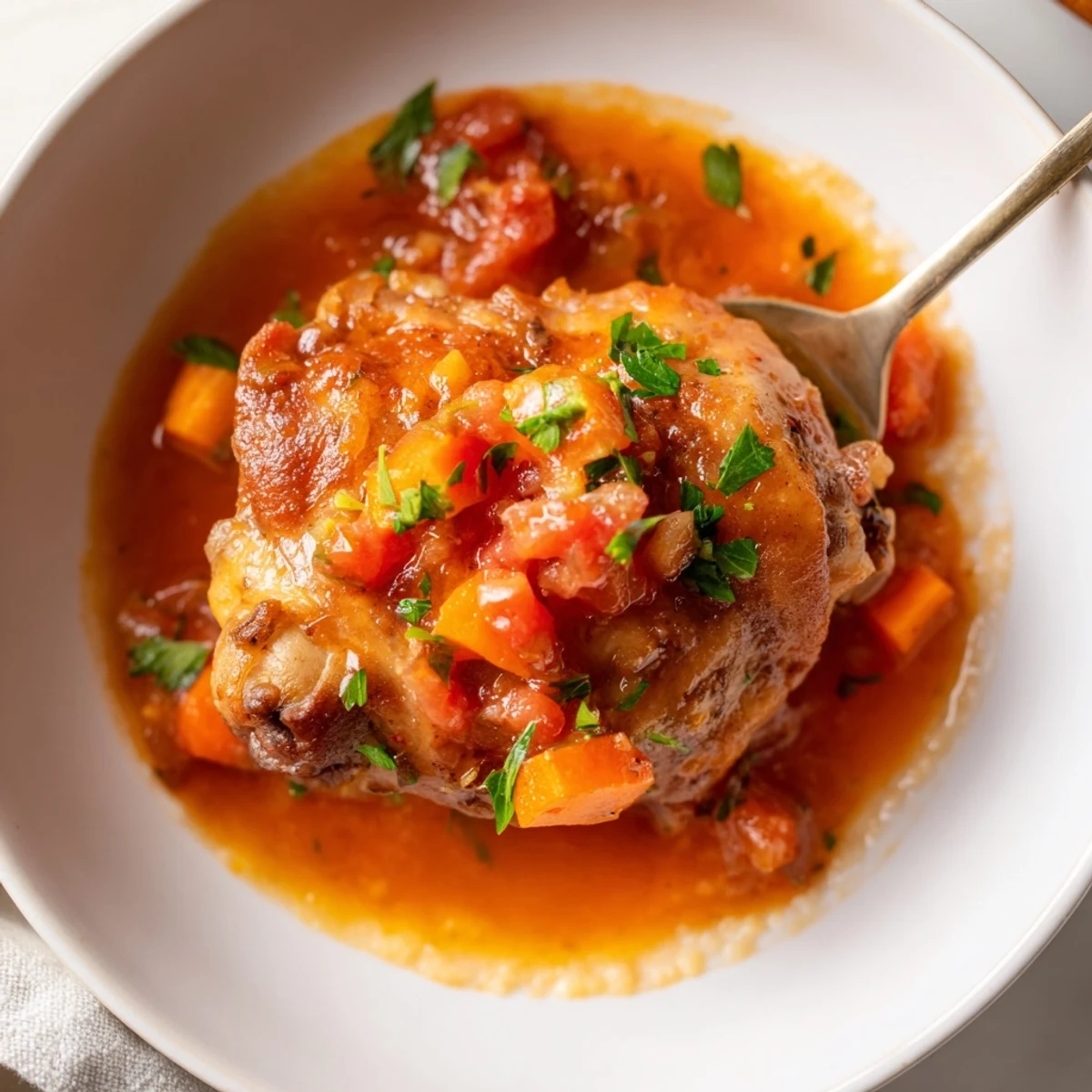 Save
Save There is something deeply satisfying about lifting the lid of a dutch oven and watching steam curl upward while the chicken literally trembles at the touch of a fork, surrendering completely to the sauce around it.
What to Serve Alongside
Creamy polenta is my first choice because it acts like a velvet pillow for the rich sauce, but mashed potatoes or a thick slice of crusty bread to mop up every drop work just as beautifully. A simple arugula salad with lemon and olive oil on the side provides a bitter contrast that the dish welcome.
Making It Your Own
Turkey thighs work as a leaner alternative, and veal shanks will give you a more traditional osso bucco experience if you want to splurge. I have even used bone in pork chops in a pinch, and the results were surprisingly wonderful, though the cooking time shortened by about fifteen minutes.
Leftovers and Reheating
This dish tastes even better the next day when the flavors have had time to mingle and settle in the refrigerator overnight. Reheat it gently on the stove over low heat rather than using a microwave, which can make the chicken tough and the sauce separate.
- Store leftovers in an airtight container for up to three days.
- Freeze portions in sealed bags for a ready made dinner on busy nights.
- Always taste and reseason after reheating because cold dulls flavors.
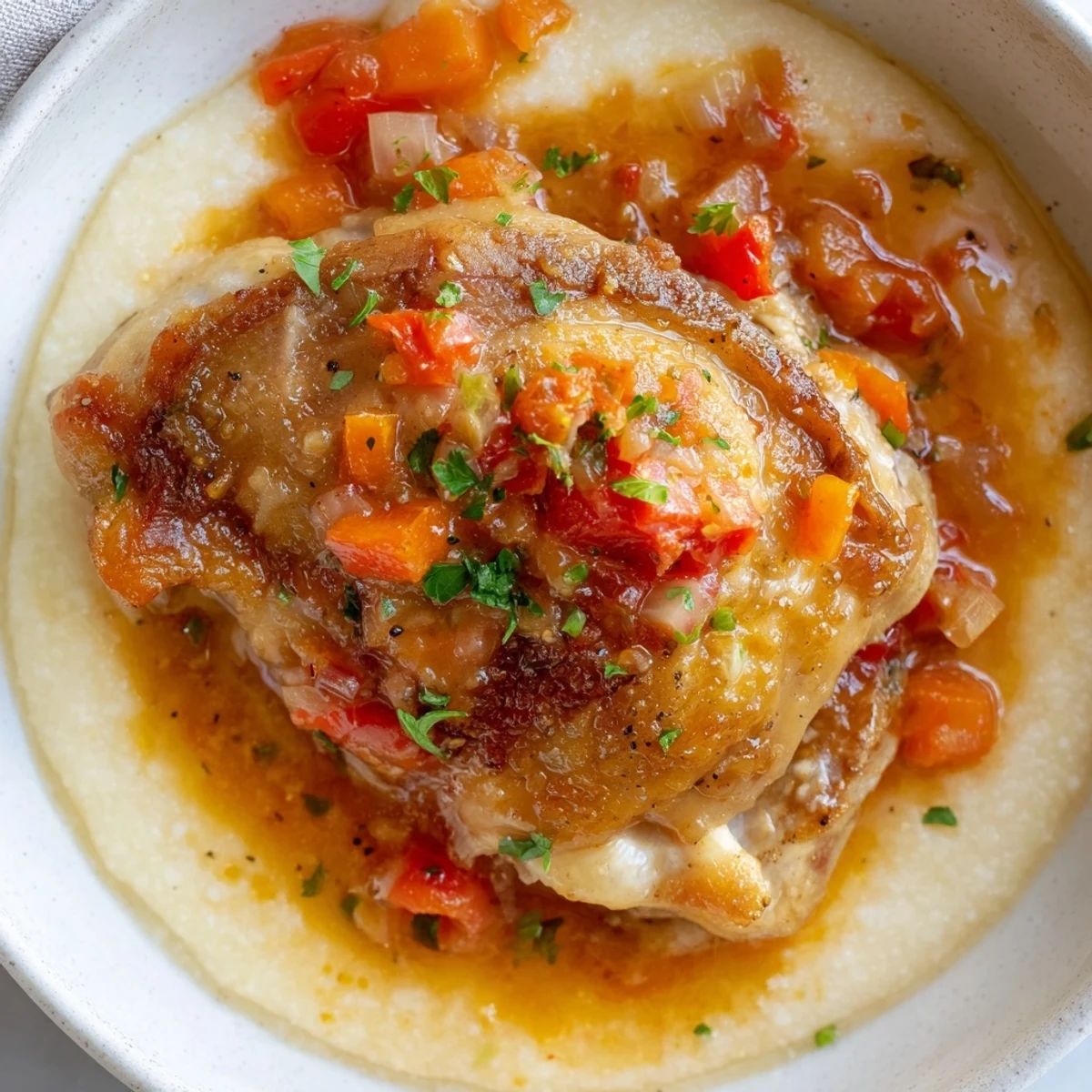 Save
Save Some meals feed the body and some feed the people gathered around your table, and this braised chicken manages to do both without asking very much of you at all. Make it once and it will follow you home forever.
Common Questions
- → How long should I brown the chicken?
-
Brown the thighs 3–5 minutes per side over medium-high heat until a deep golden crust forms. Work in batches to avoid overcrowding and ensure good color and flavor.
- → Can I use boneless chicken thighs instead?
-
Yes. Boneless thighs will cook faster and lack the bone's added depth of flavor; check doneness around 45–55 minutes of braising and adjust cooking time accordingly.
- → How can I thicken the sauce?
-
Remove the lid for the last 10–15 minutes to reduce and concentrate the sauce. For a silkier finish, mash a few of the tomatoes against the pot or stir in a small slurry of flour or cornstarch (use gluten-free starch if needed).
- → What are good side dishes and wine pairings?
-
Serve with creamy polenta, mashed potatoes, or crusty bread to soak up the sauce. Pair with Pinot Grigio or a light Chianti to complement the tomato and wine braise.
- → Can this be made ahead and stored?
-
Yes. The flavors often improve after resting. Cool, refrigerate up to 3 days, then reheat gently on low heat, adding a splash of stock or wine to loosen the sauce if it has thickened too much.
- → How do I adapt this for a gluten-free diet?
-
Use a gluten-free flour for dredging or skip the dredge and brown carefully. Check labels on stock and canned tomatoes for hidden gluten-containing ingredients.